Jordankwinn - Your Source for Jordankwinn Content

Personal essays, notes, and ideas worth sharing.

Archives (page 15 of 21)

I Tried the ‘Dopamine Menu’ Trend TikTok Won’t Shut Up About — Here’s My Honest Six-Week Report

What Even Is a Dopamine Menu?

So you’ve probably seen it floating around TikTok if you’ve scrolled past anyone’s wellness corner lately. The dopamine menu thing. It looked initially like Pinterest had a baby with a mood board, which, fair enough, made me skeptical. But here’s what it actually is: a list of activities organized by how much effort they require, broken down like a restaurant menu. Appetizers are your low-effort micro-hits. Main courses are the things that genuinely engage you but take some setup. Desserts are your rare, special-occasion joys. An ADHD coach named Jaclyn Paul popularized the framework, and then TikTok did what TikTok does and turned it into something approaching 620 million views worth of trend.

The concept sounds almost stupidly simple, which is probably why I dismissed it for a solid three months. But sometimes simple works because it’s simple. The idea is that when you’re burned out, stressed, or stuck in that particular brand of modern malaise, your brain doesn’t exactly sparkle with creative solutions for feeling better. You know intellectually that a walk would help or that calling your friend would feel nice. But your executive function is in the bathroom taking a nap. So instead of having to innovate your own joy in real time, you just have a menu already there.

The Six-Week Experiment and What Actually Happened

I made my dopamine menu on a Saturday morning with too much coffee and an absurd level of Pinterest energy. I spent maybe forty-five minutes writing down things that genuinely make me feel better, organized by effort. Appetizers included things like making tea, opening my windows, playing one song I love, or looking at photos of my friend’s dog. Main courses were longer-form stuff: working on a creative project, calling someone I hadn’t talked to in a while, cooking something new, taking a proper walk without my phone. Desserts were the rarer pleasures: going to a live music venue, spending a full afternoon at a museum, seeing my family, that sort of thing.

I stuck it on my bathroom mirror because I knew I’d see it daily but wouldn’t intellectually judge myself for looking at it. For the first week, I’ll be honest, I felt a little ridiculous. Here I was, a grown person consulting a laminated menu to figure out how to feel better. But then something shifted around day ten. I was in that familiar 3 p.m. slump where work was monotonous and my brain felt like wet cement. Usually this is where I’d scroll for forty minutes and feel worse. This time I actually glanced at my menu and picked an appetizer: I made tea in a mug I actually like instead of whatever was closest. Then I opened a window. It took five minutes and genuinely broke the spell.

Week three is where things got measurable. I started noticing I was scheduling main courses more deliberately. Instead of weekends dissolving into nothing, I’d actually do the things on the list. I called my brother. I started sketching again. I took a cooking class I’d been thinking about for months. The research backs this up, actually. A study from the Journal of Behavioral Medicine in 2025 found that people who intentionally scheduled positive activities reported 34 percent less burnout over eight weeks, particularly folks working remotely. That statistic meant nothing to me at the time, but living it meant everything.

Why This Actually Worked When Nothing Else Stuck

I think the reason this landed where other productivity systems hadn’t is that it doesn’t require you to optimize or perform. There’s no gamification, no tracking, no guilt if you don’t do every item. It’s just permission plus a roadmap. That distinction matters more than I’d have guessed. According to the APA 2025 Stress in America Report, 77 percent of adults are reporting work as a significant source of stress, the highest number we’ve seen since 2019. We’re all running on fumes a little bit. Most of us have forgotten what actually brings us joy because we’re too busy trying to remember which meeting is at noon.

The menu approach lets you skip that remembering phase. Dr. Anna Lembke, who literally wrote the book on dopamine (Dopamine Nation, if you want to fall down that research rabbit hole), has talked about how structured pleasure-scheduling can actually reset your reward system without defaulting to passive scrolling. Which, in my case, was crucial. I’m not someone who can quit my phone cold turkey. But I could scroll less when I had three other specific options that felt immediately available. It’s not willpower. It’s just architecture.

By week five, I’d added to my list and adjusted categories. Turns out having tea was less of an appetizer and more of a frequent ritual at that point. But making tea in a nice mug with actual attention? That stayed potent. I added new items. I realized that even ten minutes of streaming a show guilt-free counted as an appetizer if I was actually present for it instead of semi-aware. The menu became less a prescription and more a permission slip.

The Honest Parts Where It’s Not Magic

Full transparency: this isn’t going to cure your depression or fix a genuinely broken situation. If you’re struggling with something serious, this is a tool alongside other things, not instead of them. There were still hard days where none of it appealed to me. There were weeks where I didn’t consult the menu at all and just defaulted to my phone like a normal person. The magic wasn’t that it solved everything. The magic was that it gave me something to return to when I realized I’d been scrolling for ninety minutes.

Also, the barrier to entry really matters. Mine worked because it was physical, visible, and low-stakes. If you’re the type who’d forget a digital list or feel judged by it, this might just feel like more Pinterest nonsense. That’s fine. But if you’re someone like me, who forgets what makes you happy when you’re tired, who scrolls when you mean to rest, who can’t quite justify taking time for things you love, then having a menu removes that justification-requirement. You just do it.

Who This Is Actually For

I’m recommending this specifically to people who are working too much and feeling it. To remote workers especially. To anyone who finds themselves at the end of the day with zero memory of what happened and a vague sense of dissatisfaction. To people who are burned out enough that self-care feels like another chore. To folks like me, who love the concept of taking care of themselves but forget to do it when life gets loud.

Make your menu. Actually write things down. Put it somewhere you’ll see it. Don’t overthink the categories. Just observe what makes you feel like yourself, even for five minutes, and write it down. The real gift isn’t dopamine optimization or neurochemistry hacks. It’s permission. Permission to do the small thing. Permission to rest in a structured way. Permission to remember that you’re allowed to feel good, and sometimes you just need a menu to remember what that looks like.

Have you tried this yet, or are you in the skeptical phase I was in for three months? I’m genuinely curious what lands for people and what doesn’t. Send me a note about it.
Why I Stopped Pretending to Love Group Dinners and Other Social Lies

Last Tuesday, I declined a dinner invitation with six people I genuinely like. The host texted back with three question marks, which I suppose was fair. I used to be the person who said yes to everything, who showed up with wine and stayed until someone started washing dishes. Now I stay home and make scrambled eggs while everyone else argues about splitting the check.

It turns out there are quite a few things I’ve quietly stopped doing over the past few years. Not because I’m antisocial or going through some quarter-life crisis, but because I finally admitted they never worked for me in the first place.

The Death of Performative Socializing

Group dinners are social theater. Eight people crammed around a table meant for four, everyone talking over each other while the person at the end pretends they can hear the conversation. Someone always orders the most expensive thing and suggests we split evenly. The loudest person dominates every topic while the quiet ones check their phones under the table.

I spent years thinking I was bad at this particular social dance. I’d leave feeling drained and slightly invisible, wondering why I couldn’t just relax and enjoy myself like everyone else seemed to. Then I realized: maybe they weren’t enjoying themselves either. Maybe we were all just participating because that’s what you do when you’re a social adult with friends.

Now I suggest coffee instead. Or a walk. Or invite one person over for dinner at a table where we can actually hear each other speak. The friendships haven’t suffered. If anything, they’ve gotten better.

Small Talk and Other Wastes of Time

I stopped pretending to care about the weather approximately eighteen months ago. Not rudely, just honestly. When someone says “Beautiful day, isn’t it?” I might respond with “I haven’t been outside yet, but I saw you reading something interesting on your phone.” It’s a small redirect, but it usually leads somewhere more genuine than comparing humidity levels.

The thing about small talk is that it’s supposed to be a bridge to real conversation, but most people treat it as the destination. We get stuck discussing traffic patterns and weekend plans while completely ignoring the fact that the person in front of us just got a promotion or is worried about their dad’s health or read something that changed how they think about money.

I’m not advocating for jumping straight into existential territory with the barista. But I’ve found that asking “What’s the most interesting thing you’ve read lately?” gets you much further than “How about this rain?”

The Myth of Staying Informed

I deleted my news apps in January and haven’t reinstalled them. This probably makes me a terrible citizen, but it definitely makes me a happier person. I was spending forty minutes each morning consuming information that made me anxious and that I couldn’t act on. School shooting in another state. Political scandal I’d forgotten about by lunch. Celebrity divorce that affected my life in exactly zero ways.

The argument for staying informed is that engaged citizens need to know what’s happening. But there’s a difference between being informed and being overwhelmed. I still vote. I still read longer pieces about things I can actually influence. I just stopped treating my phone like a fire hose of bad news that I needed to drink from every morning.

The world hasn’t ended. Important news still reaches me through conversations with friends or headlines I catch in passing. But I’m no longer walking around with a constant low-level dread about things happening thousands of miles away that I can’t control.

Professional Networking Events and Other Forms of Self-Torture

I used to force myself to attend industry mixers because someone told me that’s how you advance your career. Stand in a room full of strangers, make awkward conversation about quarterly reports, collect business cards you’ll never use, and pretend you’re building meaningful professional relationships.

The last networking event I attended, I spent twenty minutes talking to a woman who kept glancing over my shoulder for someone more important. When she finally excused herself, I found myself in the bathroom scrolling through apartment listings on my phone. That’s when I knew these events weren’t for me.

Real professional relationships happen through shared work, mutual respect, and actual collaboration. They don’t happen because you shook hands at a conference center bar while eating mini quiches. The best career opportunities I’ve received came through people who knew my work, not my elevator pitch.

The Freedom of Admitting What Doesn’t Work

There’s something liberating about acknowledging that certain widely accepted social activities just don’t suit you. It’s not a character flaw or a sign that you need to work harder at being social. Sometimes it’s just honest self-knowledge.

I still go to birthday parties and weddings and other celebrations that matter to people I care about. I still have dinner with friends, just not in groups of eight. I still care about what’s happening in the world, just not every single thing all at once. I still maintain professional relationships, just not through forced conversation over lukewarm white wine.

The trick is distinguishing between things that challenge you in useful ways and things that drain your energy without adding anything meaningful to your life. Growth happens in the former. The latter is just performance.

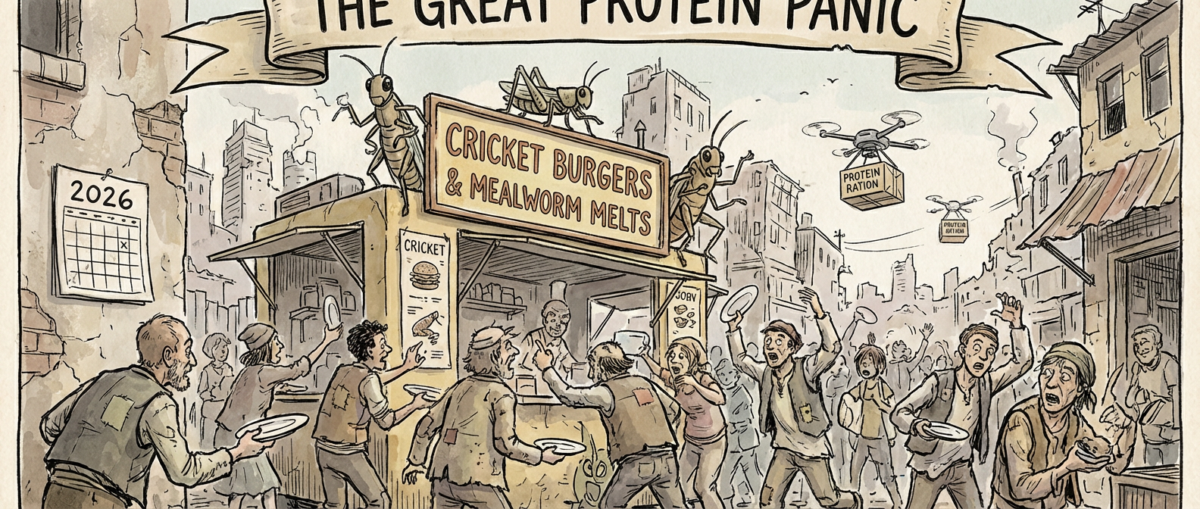
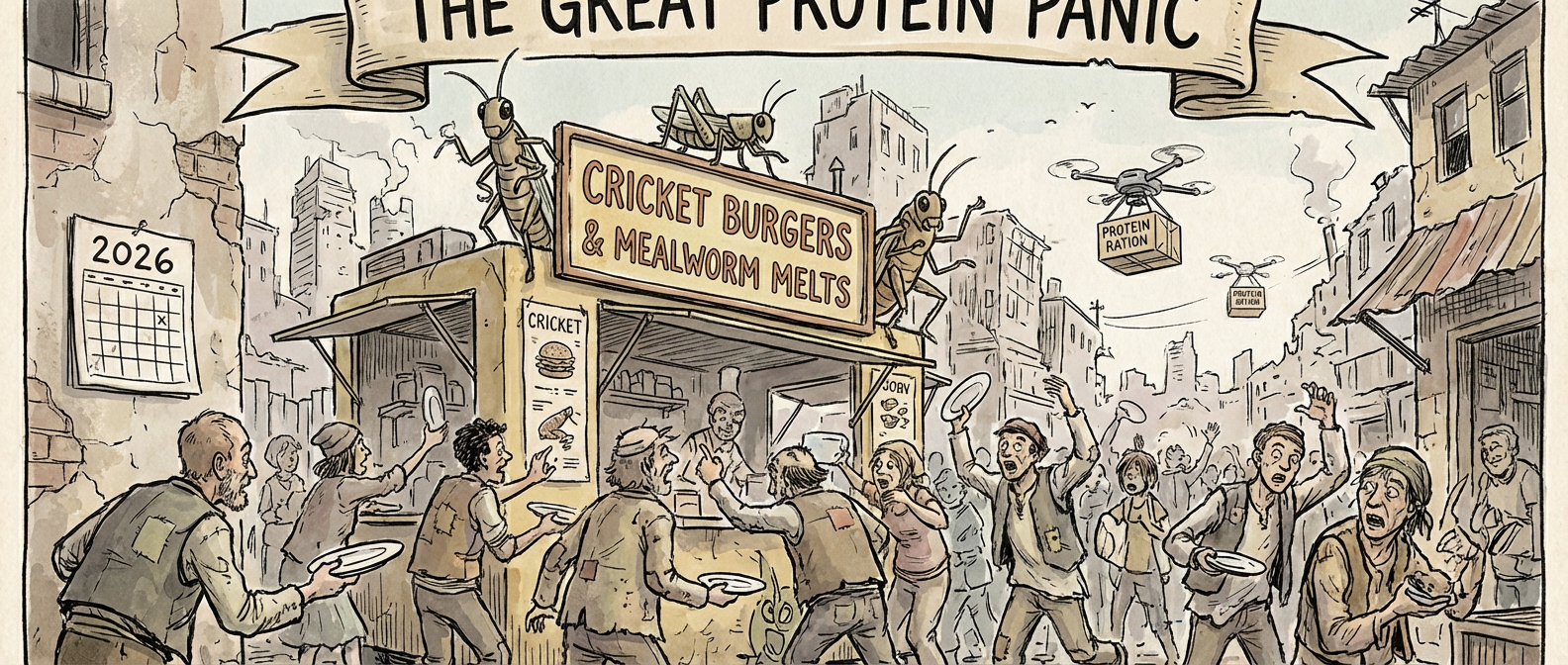
The Great Protein Panic of 2026: Why Everyone’s Suddenly Obsessed with Insect Burgers

When Cricket Flour Became the New Quinoa

Remember when quinoa was the exotic grain that made you feel like a wellness guru? Well, 2026 was the year cricket flour claimed that crown. I’m still processing how we collectively decided that grinding up insects was the answer to our dinner prayers, but here we are.

The Great Protein Panic of 2026: Why Everyone's Suddenly Obsessed with Insect Burgers
The Great Protein Panic of 2026: Why Everyone’s Suddenly Obsessed with Insect Burgers

The tipping point came in March when Whole Foods cricket protein launch happened. Fifty thousand bags of Tiny Farms cricket flour sold in seven days. That’s not a typo. Seven days. I watched my neighbor Karen—the same Karen who spent three years asking if the store-bought hummus was “really” organic—post Instagram stories about her cricket protein smoothie bowl.

The math started making sense when cricket protein became cheaper than beef. Not just a little cheaper. Way cheaper. Those automated facilities that opened in Texas and Ohio last year drove prices down by seventy-eight percent. Suddenly your grocery budget could stretch further with bugs than burgers.

The David Chang Effect

Nothing signals a food trend like a celebrity chef betting big on it. David Chang’s Swarm restaurants didn’t just serve cricket dishes—they made them cool. Six months of sold-out reservations will do that.

I tried to get a table in August. The waitlist was longer than Hamilton tickets in 2016. Chang had somehow made eating insects feel like joining an exclusive club rather than surviving a reality TV challenge. The crispy cricket tacos became the dish everyone needed to try, photograph, and debate on social media.

By December, Chang announced plans for one hundred locations. One hundred. That’s not testing the waters anymore—that’s jumping in headfirst and bringing floaties for everyone else.

Following the Money Trail

February brought the FDA approval that changed everything. Lab-grown cricket meat got the official green light, and venture capital firms started throwing money around like confetti at a startup wedding. Funding for insect protein companies jumped four hundred percent almost overnight.

The UN insect farming sustainability report from last year probably helped convince the investors. Ninety-seven percent fewer greenhouse gases than traditional livestock for the same amount of protein. Those numbers matter when climate anxiety meets profit potential.

Every week seemed to bring news of another insect protein startup getting millions in funding. Companies with names like “Chirp Foods” and “Buzz Nutrition” became household names faster than most people could pronounce “entomophagy.”

The Quiet Revolution in Your Pantry

What struck me wasn’t the dramatic announcements or celebrity endorsements. It was watching cricket protein sneak into everyday products without much fanfare. Energy bars, pasta, protein powder—suddenly insects were everywhere, hiding in plain sight.

My teenage nephew didn’t even notice his favorite post-workout shake now contained cricket protein until I pointed it out. His response? A shrug and “It tastes the same.” Maybe that’s the real story here. Not the conscious choice to eat bugs, but the unconscious acceptance of them as just another ingredient.

The environmental angle became impossible to ignore. When your protein choice could reduce your carbon footprint by ninety-seven percent, the decision felt less weird and more obvious. Climate change stopped being an abstract concept when it landed on your dinner plate.

Looking Back at the Turning Point

Twenty twenty-six was the year we stopped asking “Would you eat bugs?” and started asking “Which cricket protein tastes best?” The shift happened so gradually, then suddenly, like most cultural changes do.

The economics made it inevitable. The environmental data made it responsible. The celebrity endorsements made it trendy. But underneath all that was something simpler—we got used to it. Humans are remarkably adaptable when the alternative is worse for our wallets and our planet.

I’m curious what food trend will seem obvious in hindsight by this time next year. What are you noticing in your own grocery cart that might be the next big shift? Sometimes the most interesting changes are the ones we don’t see coming until they’re already here.

The Projects That Matter Are Usually the Ones Your Boss Doesn’t Care About

The Email That Never Got Sent

Last Tuesday I spent three hours writing documentation for a tool that processes customer feedback data. Nobody asked me to do this. My manager doesn’t even know the documentation exists. The tool itself was something I built six months ago to solve a problem that was driving me crazy, but officially it doesn’t exist either.

This is the contradiction of caring about your work: the projects that actually matter to you are rarely the ones that matter to anyone else. They’re the side quests that come from genuine frustration or curiosity, not from quarterly planning sessions. They’re what you work on when you’re supposed to be doing something else.

Why Official Projects Feel Like Performance Art

Here’s what I’ve noticed about most official work projects: they’re designed by committee to solve problems that sound important in meetings but feel abstract when you’re actually doing the work. Take the “customer experience optimization initiative” I’m technically leading right now. It involves a lot of spreadsheets and stakeholder alignment calls, but zero interaction with actual customers.

Meanwhile, the feedback tool I mentioned earlier came from reading hundreds of support tickets and realizing our categorization system was completely broken. Customers were telling us they were confused, but we were categorizing their complaints as “technical issues” when they were really saying “your interface makes no sense.” That discrepancy kept me up at night.

The difference is obvious once you see it. Official projects optimize for meetings and metrics. Unofficial projects optimize for actually fixing things.

The Rebellion of Small Improvements

I’ve started keeping a list of these shadow projects, partly because I forget about them otherwise. There’s the automated email I set up to remind the sales team about feature requests that have been sitting in our backlog for over six months. There’s the simple dashboard I built to track which bugs actually affect real users versus the ones that only show up in our testing environment. Last month I spent my lunch breaks redesigning our internal status page because the current one requires three clicks to find out if our API is working.

None of these appear on my performance review. Most of them took less time to build than a single planning meeting for our official projects. But they solve real problems for real people who have to deal with broken processes every day.

The best part is that when you’re working on something you actually care about, the solution tends to be simpler. You’re not trying to accommodate every possible edge case or political consideration. You just want to fix the annoying thing.

When Caring Becomes Risky

There’s a trap here, though. I’ve watched colleagues burn out by caring too much about projects that their organization fundamentally doesn’t value. They build beautiful solutions to important problems, then get frustrated when nobody adopts them or gives them credit. The passion that makes these projects meaningful can also make their failure feel personal.

I learned this lesson with a data visualization tool I built two years ago. I was convinced it would change how our team understood user behavior. I spent weeks perfecting it, adding features nobody requested. When it launched to zero fanfare and minimal adoption, I took it as a personal rejection rather than what it actually was: a mismatch between what I thought was important and what the organization was ready to prioritize.

The trick is learning to care without attachment to outcomes. Build the thing because it needs to exist, not because you need recognition for building it.

Finding Your Real Work

The projects I actually care about share a few characteristics: they solve problems I run into personally, they make someone’s daily work noticeably easier, and they feel like craftsmanship rather than performance. They’re small enough to build without permission but meaningful enough to matter.

Sometimes these projects do get noticed and become official initiatives. The feedback categorization tool eventually caught the attention of our product team, and now it’s being integrated into our main platform. But that’s not why I built it, and it wasn’t any less valuable when it was just a script running on my laptop.

I think the real work happens in the margins between what we’re supposed to be doing and what we see that needs to be done. It’s the difference between following a job description and actually solving problems. Most organizations struggle to create space for this kind of work, but that doesn’t mean it isn’t happening. It just means it’s happening quietly, in documentation nobody asked for and tools that don’t appear on any roadmap.

What are you working on that nobody knows about? What small rebellion against broken processes are you quietly nurturing? Those projects might matter more than anything in your official workload.

The Coffee Shop in Portland Where I Could Actually Think

The Counter That Knew My Order

There was this coffee shop in Portland where the barista started making my drink before I reached the counter. Not because I was a regular in that performative way where you announce your loyalty to strangers, but because I’d been sitting in the same corner booth for three months, nursing the same oat milk cortado while pretending to work on my novel. The foam art stopped being a surprise after week two.

I’ve been thinking about that place a lot lately, mostly because I can’t find anything like it here in Denver. It’s not about the coffee, though theirs was excellent. It’s about how some spaces just fit around you like a well-worn jacket, no adjustments needed.

The Apartment That Actually Made Sense

My friend Sarah had this studio in Brooklyn that was technically too small for human habitation. The kitchen was three appliances arranged in a line, and her bed doubled as a couch because there wasn’t room for both. But somehow it worked. The afternoon light hit just right around 4 PM, and she’d positioned her desk to catch it perfectly. Her plants thrived in ways that defied the laws of New York real estate.

I spent exactly four nights there over two years, but I can still tell you where she kept the good tea and which floorboard creaked near the bathroom. Some places imprint themselves on you with an efficiency that has nothing to do with square footage. I think about that studio when I’m rearranging my own furniture for the fifteenth time, trying to make my spacious bedroom feel half as comfortable as her 300-square-foot life.

The Library Where Time Moved Differently

The downtown branch on Fifth Street had this reading room with windows that faced north, so the light was consistent all day. No dramatic shadows shifting across your page, no squinting when the sun decided to make an appearance. Just steady, reliable illumination for getting things done. I finished two freelance projects there that I’d been avoiding for months at home.

The woman who worked the reference desk had been there since 1987 and could find anything in under three minutes. She never asked why I needed a 1962 city planning document or the complete works of a poet nobody had heard of. Just handed them over with the kind of professional disinterest that felt like respect for your privacy.

Libraries are supposed to feel institutional, but this one felt like someone’s very organized living room. Maybe it was the way the older patrons had claimed their favorite chairs, or how the afternoon newspaper readers had worked out an unspoken system for sharing sections. Either way, I could think clearly there in ways I couldn’t anywhere else.

The Kitchen That Taught Me Things

My grandmother’s kitchen had exactly two good knives and a cutting board that had been scored by forty years of meal prep. The gas burners took forever to heat up, and the oven ran twenty degrees hot. By all reasonable standards, it was poorly equipped. But I learned to make bread there, and pasta from scratch, and how to rescue oversalted soup with a halved potato.

She never measured anything, which used to drive me crazy when I was trying to recreate her recipes in my own kitchen. “Just until it looks right,” she’d say, adding flour to pie dough by feel. Now I realize the kitchen taught me to cook by making me pay attention. No fancy equipment to hide behind, no digital timers to think for me. Just ingredients and instinct and the particular way steam rose from her ancient stockpot.

I can make her chicken soup in my current kitchen, with its induction cooktop and convection oven. But it never tastes exactly the same, and I think it’s because I’m not the same person who learned to cook in a place that demanded attention instead of offering convenience.

The Places That Stick

These aren’t necessarily the most beautiful places I’ve been, or the most comfortable, or even the ones where I’ve spent the most time. They’re the places that somehow aligned with who I was in that moment, creating a temporary sense of rightness that I’m still chasing. The coffee shop closed last spring, Sarah moved to Oakland, the library got renovated and lost its reading room windows, and my grandmother’s house was sold after she died.

Maybe that’s part of what made them feel like home, the knowledge, even then, that they weren’t permanent. That I’d better pay attention while I was there, memorize the way the light fell and the sounds the building made and exactly how it felt to belong somewhere without trying.

I’m curious about the places that have stuck with you. Not the ones you’re supposed to remember, but the random coffee shops and borrowed bedrooms and library corners that somehow got under your skin. The places that taught you something about what it feels like when everything just fits.