Jordankwinn - Your Source for Jordankwinn Content

Personal essays, notes, and ideas worth sharing.

Archives (page 14 of 21)

Soft Saving Is Either Your Financial Glow-Up or a Beautiful Trap—Here’s How to Tell

The TikTok Movement That’s Making Retirement Sound Like a Scam

If you’ve scrolled past any financial content in the last year, you’ve probably encountered “soft saving.” The concept is deceptively simple: prioritize your present life—the experiences, the comfort, the small joys—over aggressively padding a retirement account that feels impossibly distant. Spend money on that coffee shop you love. Take the weekend trip. Buy the quality sheets. Stop treating your twenties and thirties like a holding pattern before real life begins.

The appeal is obvious. The trend has racked up over 890 million views on TikTok, and there’s a reason it’s resonating so loudly. According to Credit Karma soft saving survey findings, roughly 73 percent of Gen Z respondents are choosing to prioritize their present quality of life over retirement savings. That’s not a fringe philosophy anymore. That’s a generational stance.

But here’s the thing nobody wants to say out loud: soft saving is either brilliant financial self-care or an exceptionally pretty way to wake up at forty-five with thirty thousand dollars in retirement savings. Maybe both. The truth is messier than the TikTok videos suggest.

What the Numbers Actually Look Like When You Stop Scrolling

The average American aged 25 to 34 has accumulated approximately $37,211 in retirement savings as of 2025. Read that sentence again. Not per year. Total. For a decade-plus of earning years. The gap between intention and reality is the size of a house.

Meanwhile, Fidelity Investments has this awkward benchmark they keep mentioning: you should have roughly one year of your salary saved by age thirty. Only about 34 percent of millennials have hit that target. Two-thirds of an entire generation is behind on a goal that’s supposed to feel achievable. When the baseline feels out of reach, it’s easier to decide the whole system is rigged and just…not play.

The personal savings rate has dropped to 3.8 percent according to Bureau of Economic Analysis personal savings data—near post-pandemic lows as of late 2025. People aren’t saving. Not aggressively, not quietly, not at all. And soft saving is being packaged as the philosophy that lets you stop feeling guilty about that choice.

The Legitimate Version (It Does Exist)

Here’s the thing: soft saving actually works beautifully for a very specific person. You should consider this philosophy if you’re burned out on traditional financial advice, if you’ve realized that extreme deprivation makes you miserable, if your money anxiety is partly rooted in feeling like you’ll never do enough anyway.

Soft saving works for people who needed permission to enjoy their lives. If you were researching retirement vehicles at age twenty-five while eating ramen and skipping social events, soft saving is your permission slip. It’s the correction to an overcorrection—a reminder that yes, your present matters. Your mental health matters. The concert you want to see matters. Spend the money. Build the life you’re actually living right now, not the theoretical one you’ll inhabit in forty years.

It also works if you’re genuinely wealthy enough that your baseline expenses plus comfort purchases still leave room for meaningful retirement contributions. If you’re making six figures and soft saving means you’re putting away fifty thousand a year instead of eighty, you’re probably fine. The issue is that soft saving has become a trendy philosophy for people making forty thousand a year who genuinely can’t afford it.

The Version That Quietly Terrifies Me

What worries me is that soft saving has become a beautiful rationalization. It’s been rebranded as self-care and self-advocacy when sometimes it’s just the financial version of doom scrolling—a way to avoid an uncomfortable conversation with yourself about trade-offs.

The trend exploded partly because of rising cost-of-living anxiety. People looked at housing prices, medical bills, and student loan payments and basically decided the game was rigged anyway. Why save for a future that feels unaffordable when you could actually experience your life right now? That’s not wrong exactly, but it’s incomplete. You can enjoy your present AND make intentional choices about your future. These aren’t mutually exclusive.

The dangerous version of soft saving is when it becomes a blanket justification for every purchase. When you’re one emergency away from financial chaos but you’re calling it “prioritizing quality of life.” When your anxiety isn’t about the philosophy—it’s about your actual financial security, and soft saving lets you avoid naming that problem directly.

How to Actually Know Which Version You’re Living

Ask yourself this: if an unexpected expense showed up tomorrow, would you be okay? Not “you’d figure it out” okay. Actually okay. If you can’t answer yes, soft saving isn’t a philosophy you can afford. It’s a coping mechanism, and coping mechanisms feel great until they don’t.

The real move is soft saving with guardrails. Keep a legitimate emergency fund. Contribute something to retirement accounts consistently—even if it’s not the aggressive amount you think you “should.” Then spend freely on what matters to you with the money that remains. This is where soft saving becomes actually smart: it’s not an either-or proposition. It’s a framework for being intentional about trade-offs instead of pretending trade-offs don’t exist.

If you’re already comfortably hitting those baseline safety markers, then absolutely go forth and soft save. Take the trips. Buy the good coffee. Stop performing financial misery for internet points. But if you’re in the majority—modest retirement savings, a thin emergency fund, and a cost of living that leaves little room for error—then soft saving might be the philosophy that feels best in the moment and wrecks you later.

I’m genuinely curious where you land on this. Are you soft saving because you’ve made peace with your future, or because you’ve decided the future is too scary to think about? There’s a difference, and I think it matters. Tell me in the comments which version resonates as true.
I Tested Five AI Nutritionist Apps After the FTC Started Scrutinizing Their Health Claims — Here’s the Honest Breakdown

The Moment I Realized Something Was Off

Last October, I was scrolling through my email and noticed something that felt oddly significant in a way most tech news doesn’t: the FTC had just sent warning letters to twelve different AI nutrition apps, basically telling them to stop claiming their algorithms could personalize metabolic coaching or guarantee weight loss. Twelve companies. All in one batch. It wasn’t a random enforcement action. It felt deliberate, almost tired, like a parent finally setting a boundary they probably should have set months ago.

I Tested Five AI Nutritionist Apps After the FTC Started Scrutinizing Their Health Claims — Here's the Honest Breakdown
I Tested Five AI Nutritionist Apps After the FTC Started Scrutinizing Their Health Claims — Here’s the Honest Breakdown

I’d been casually using one of these apps for a few months by then, and I remember thinking, “Wait. I’ve been getting my nutrition advice from something the government just told to back off?” That’s when I decided to do what I probably should have done from the start: actually test a few of these things with some real intention. Not to trash them or prove they work, but to see what they actually do versus what they claim to do. There’s a difference that matters.

Illustration for I Tested Five AI Nutritionist Apps After the FTC Started Scrutinizing Their Health Claims — Here's the Honest Breakdown
Illustration for I Tested Five AI Nutritionist Apps After the FTC Started Scrutinizing Their Health Claims — Here’s the Honest Breakdown

The Apps I Tested and What the Market Actually Looks Like

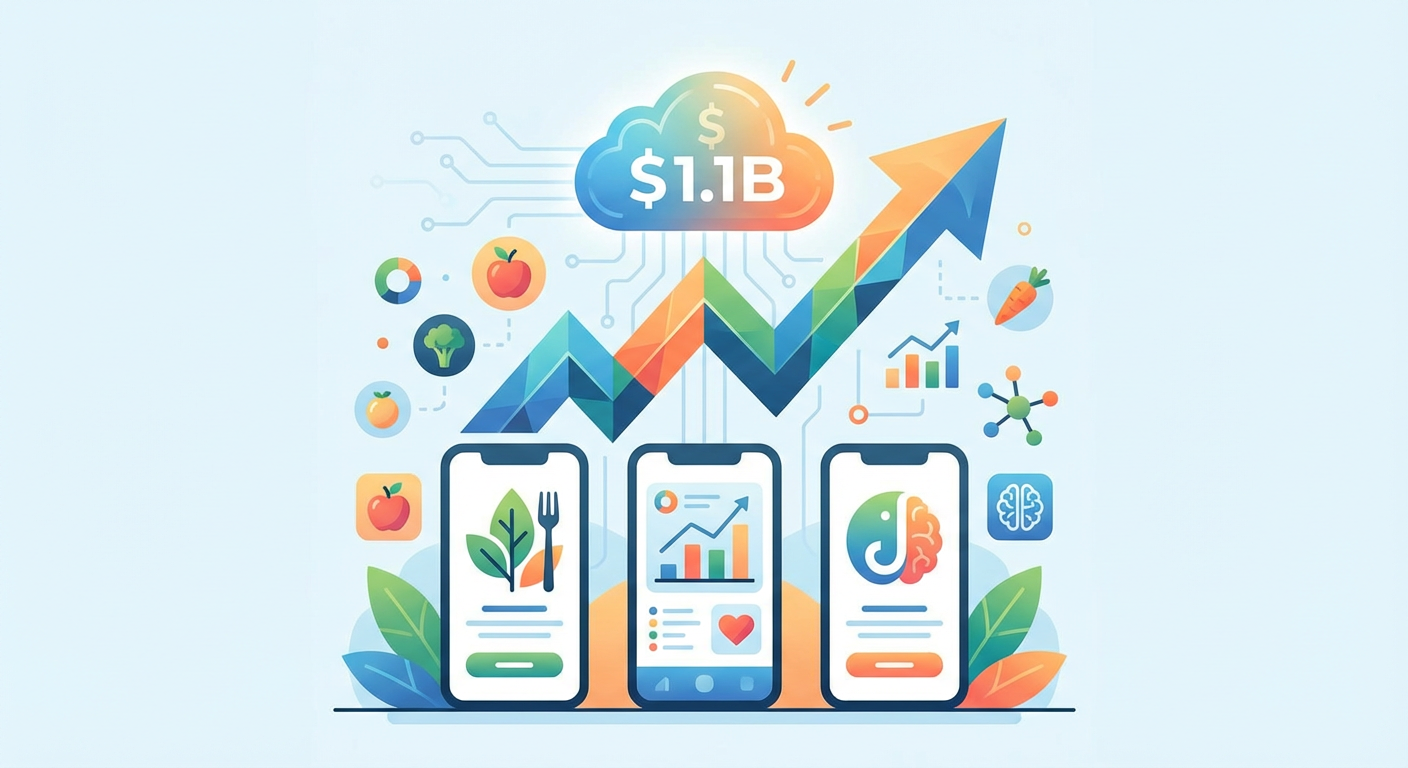
The AI nutrition app space has become genuinely big money. We’re talking $1.1 billion in global revenue in 2025, with apps like Noom, Zoe, and January AI pulling most of the downloads according to app analytics data. These aren’t scrappy startups anymore. They’re venture-backed companies with serious resources and serious marketing budgets. That’s partly why the FTC warning felt significant. The market had grown past a certain threshold and someone noticed.

I downloaded five apps across different price points and philosophies: Noom (the psychology-first approach), Zoe (the microbiome testing angle), January AI (the newer entrant), MyFitnessPal (the OG database app with AI features bolted on), and one I’m going to call “Generic Calorie Counter” because honestly, I can’t remember which one it was by the end. The experience was somehow both impressive and disappointing in ways that don’t fit neatly into a review format.

What Actually Happens When You Use Them

Noom asked me approximately eight million questions about my eating habits and psychology before I could get a meal recommendation. It felt invasive in a way that was almost clever. January AI moved faster, using machine learning to build a profile from less data. Zoe wanted me to order a home microbiome test kit and do these blood sugar monitoring experiments. MyFitnessPal basically just wanted me to log food like it’s 2012.

Here’s what I noticed: the apps with the strongest science behind them were also the most honest about their limitations. Zoe, which markets its personalized nutrition program as being based on gut microbiome testing and real-time data, has actually published peer-reviewed research. There’s a study in Nature Medicine showing that their participants saw a 17% improvement in how their bodies handled blood sugar after eighteen weeks. That’s real data from a rigorous journal. But even with that, the framing matters. A 17% improvement in one biomarker is meaningful. It’s not the same as “lose twenty pounds fast.”

The apps that made the broadest claims tended to use the vaguest language once you actually got into the experience. They’d promise “personalized metabolic coaching” but then recommend something pretty generic once you hit the paywall. It was like ordering coffee and being promised “a beverage customized to your unique taste profile” only to get drip coffee with the option to add cream.

The Reality Check That Research Keeps Showing

I kept one nagging question in my head while testing these apps: Do they actually work? And if so, how much better than just, like, trying to eat vegetables?

A meta-analysis published in BMJ Open this year looked at thirty-four randomized controlled trials comparing different diet app approaches. The average weight loss from using these apps over twelve weeks was 1.8 kilograms. About four pounds. When people worked with an actual dietitian instead, they lost 3.1 kilograms on average. So apps work. They just work significantly less well than talking to a human expert. That’s important context that almost no app marketing includes.

There’s also the confidence problem. A Pew Research survey from this year found that 44% of Americans who used a health app in the past year weren’t at all confident that the app’s recommendations were actually based on solid science. Nearly half. That’s not a small number of skeptics. That’s a sign that something in the relationship between these apps and their users feels fundamentally off. After testing five of them, I get why.

What the FTC Warning Actually Changed

The FTC Digital Health Technology enforcement actions were a start, but walking through this myself made me realize it’s more complicated than just “companies are lying.” Some of these apps genuinely use interesting science. Some of them collect data that could be genuinely useful. The problem is the gap between what they actually do and what they promise.

After months of testing, I found myself using elements of different apps rather than committing to any single one. I use MyFitnessPal’s database because it’s comprehensive and unsexy, which somehow makes it more trustworthy. I pay attention to Noom’s behavioral prompts about my eating patterns because they asked enough questions that they actually seemed to notice things specific to me. I skipped the microbiome testing from Zoe, partly because I was cheap and partly because I kept remembering that 1.8 kg figure.

What surprised me most was that the apps worked best when I stopped believing their marketing and just used them as tools for data collection and reflection. The AI part was almost secondary. It was the act of paying attention that mattered. Any of these apps could have been a spreadsheet and gotten me about 80% of the way there.

I’m curious what your experience has been if you’ve tried any of these. Did they change anything for you, or did they just sit on your phone collecting dust and notifications? There’s probably something worth knowing in how different people’s expectations matched up with what they actually got.

I Tried the 2025 ‘Dopamine Menu’ Trend for 30 Days and Here’s What My Messy Tracking Spreadsheet Actually Showed

Why I Downloaded Yet Another App (And Then Didn’t Use It)

Around the new year, I noticed something weird happening on my TikTok feed. Everyone was suddenly organizing their joy like meal prep. Little flowcharts. Color-coded spreadsheets. Hashtags with millions of views. The “dopamine menu” had arrived, and it looked like exactly the kind of thing that would either save my life or collect digital dust alongside my abandoned meditation apps.

For context, the concept came from ADHD coach Jaclyn Paul and got absolutely massive on social media. The idea is simple: you categorize activities by how much emotional restoration they require. “Appetizers” are quick hits—scrolling, texting a friend, making tea. “Main courses” are moderately engaging things like going for a walk or watching a show. “Desserts” are the deep, meaningful activities that take real energy but pay dividends: cooking something ambitious, seeing friends in person, working on creative projects. By February 2025, Notion had released an official template for this, and 400,000 people downloaded it in the first month alone. The trend had racked up over 180 million views on TikTok.

I was skeptical, but also curious. And more importantly, I was tired. The APA 2025 Stress in America Report found that 77% of adults listed lack of meaningful leisure time as a top stressor. That felt precise enough to read as a personal attack.

The Spreadsheet Era Begins (Slightly Chaotically)

I created a spreadsheet instead of using an app. This was intentional. I wanted friction. I wanted to notice what I was doing. So every time I did something restorative—or tried to—I logged it. The category. The time spent. How I felt after on a scale of one to ten. By day three, I’d added columns for what I was avoiding and whether I’d chosen the activity or just defaulted to it.

The early days were revelatory in ways I didn’t expect. I realized I was treating scrolling Instagram as a main course when it was clearly an appetizer. More importantly, I was never eating actual desserts. Real desserts. The kind that require setup. My life had become a diet of appetizers and the occasional guilty microwaved main course. No wonder I felt perpetually unsatisfied.

By day seven, my spreadsheet had morphed into something between a diary and a surveillance operation. Tuesdays were bad—I’d hit a wall around 3 p.m. and just mainline appetizers until bedtime. Weekends had too many open hours and I’d freeze. Rain made me retreat. Productivity hangovers were real: after a big work week, I’d refuse to do anything that felt like “self-care” because it sat too close to productivity culture for comfort.

Studies show that structured leisure planning actually works. A 2025 study in the Journal of Affective Disorders found that when adults with ADHD tracked and intentionally planned their activities across these categories, emotional exhaustion dropped by 23% over eight weeks. But here’s what surprised me: the tracking wasn’t the magic part. The categorization was. It forced me to stop thinking of my downtime as failure and start thinking of it as something worth planning for.

When Your Tracking Spreadsheet Gets Too Real

Around day twelve, I hit what I’m calling “the awareness cliff.” I could suddenly see very clearly how I was spending my time. Not just the hours, but the emotional quality of them. And it wasn’t always flattering.

I had desserts on my list that I almost never actually did. Painting. Coffee with actual friends. These weren’t missing from my calendar because I was too busy. They were missing because they required me to believe I deserved them. That was the part the dopamine menu didn’t warn you about. It’s great for categorizing activities, but you still have to choose yourself.

The spreadsheet got messy here. Some days I’d scribble little notes. “Didn’t do this but wanted to” or “Did this and felt weird after” or “This felt like a chore, categorization wrong.” The data became less clean, which meant it became more honest.

What emerged was something useful but uncomfortable: the permission structure. Once I’d decided that an activity was a “dessert” worth doing, I could actually do it without feeling like I was wasting time. And once I’d accepted appetizers as legitimate sometimes, I stopped treating them as a failure state. I could have toast and tea at ten in the morning and call it what it was—a necessary break—instead of evidence that my life had no meaning.

The Thirty-Day Data That Probably Means Nothing Specific But Everything General

After thirty days, my spreadsheet looked like someone had organized their thoughts with both precision and abandon. Here’s what the actual numbers said:

I was doing desserts about twice a week. Before this experiment, I would have guessed never. Appetizers had gone from a guilty blur to a known quantity—I could have them without narrating my own failure. I’d started choosing a main course most days, something that moved the needle without requiring full setup. The quality-of-life improvement wasn’t massive, but it was consistent. I was sleeping better. Less of that restless feeling of having wasted the evening.

The spreadsheet also showed something weirder: I was doing different things on days I’d tracked versus days I forgot. Knowing I’d have to log it made me more intentional. But some days I just didn’t log anything and had a perfectly fine time anyway. The tracking itself became another appetizer sometimes. That felt worth noting.

The trend is popular for a reason. Notion Template Gallery had hundreds of different dopamine menu variations, and people were genuinely finding this framework useful. What worked wasn’t the specific categorization. It was the permission it gave to think about restoration as something you could plan for and actually deserve.

What Actually Stuck (And What Didn’t)

I still use a version of this system. Not the spreadsheet—that started feeling like homework after a while. But I keep a running note on my phone with activities in each category. It’s useful when I’m stuck, when I don’t know what I need but I know something’s off. I’ll scroll through and think, oh, appetizer. Or maybe it’s time for a main course. Sometimes it’s the weekend and I know a dessert is available and I should just do it.

What didn’t stick: the optimizing. I’m not trying to hit a certain ratio of activities or prove I’m doing it right. That’s when it becomes another thing to fail at. The framework works best when it’s loose, when you’re using it to notice yourself rather than grade yourself.

The thirty days taught me that I was more starved for intentionality than for specific activities. I didn’t need a magic formula. I needed permission to choose myself—to decide that today was an appetizer day or a dessert day and stop judging it. The spreadsheet was just the thing that let me see I’d never actually given myself that permission before.

If you’re curious about this, try it. Build your own framework. Make it messy. Track what you do and notice what patterns come up. And if you find that you’ve been living on appetizers for months, well—that’s the actual data point. What would change if you scheduled a dessert next week?

I Tried the Apple Vision Pro for 30 Days and Here’s What Nobody Tells You About Eye Strain

The First Week: When Nobody Mentions the Headaches

I picked up the Vision Pro on day one of my experiment knowing exactly what I was signing up for: three thousand five hundred dollars, a device that Apple released back in February 2024, and thirty days to figure out if spatial computing was actually going to change my life or just give me an expensive headache. Spoiler alert: the answer was yes to both.

I Tried the Apple Vision Pro for 30 Days and Here's What Nobody Tells You About Eye Strain
I Tried the Apple Vision Pro for 30 Days and Here’s What Nobody Tells You About Eye Strain

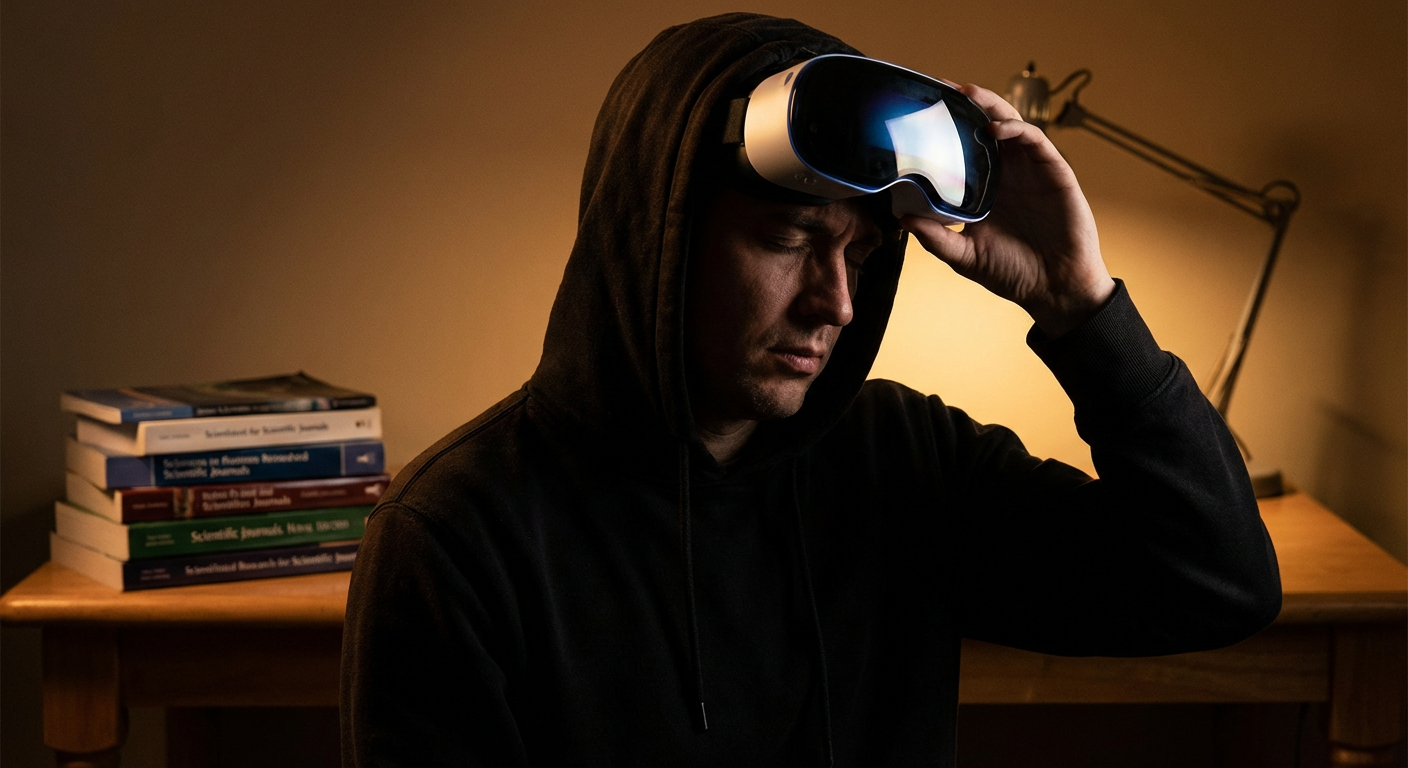
The first thing you notice isn’t the display or the weird hand-tracking magic. It’s how your eyes feel after about ninety minutes of use. Not tired in the way you get tired looking at your phone. Different. Like someone’s slowly tightening a vice around the bridge of your nose. I kept thinking I was just adjusting to wearing the device, that it would pass. I was wrong about that.

By day three, I started paying attention. The headaches weren’t random. They showed up around the same time every afternoon, right after I’d been using the Vision Pro to work. I didn’t immediately connect the dots because I was too busy being impressed by the device itself. That’s the trap, isn’t it? The technology is so convincing that you ignore what your body’s trying to tell you.

Illustration for I Tried the Apple Vision Pro for 30 Days and Here's What Nobody Tells You About Eye Strain
Illustration for I Tried the Apple Vision Pro for 30 Days and Here’s What Nobody Tells You About Eye Strain

The Science Nobody Reads: Eye Accommodation and Why Your Brain Gets Confused

Here’s the thing that changed everything for me: I actually read the small print. You know, that section in Apple Vision Pro health and safety guidelines that nobody looks at? Buried in there is the 20-20-20 rule. Every twenty minutes, take a break. Look at something twenty feet away for twenty seconds. Simple. Also completely non-negotiable if you want to keep your eyes functioning.

I started digging into the actual research around extended headset use. A 2025 study in the Ophthalmic and Physiological Optics journal found something interesting: when people use XR headsets for more than two hours at a stretch, about seven out of ten participants showed measurable increases in something called accommodative lag. Your eyes basically forget how to focus properly. They get stuck in a weird middle position between near and far vision. Your brain keeps trying to make sense of conflicting signals, and that’s when the headaches arrive.

What’s happening is your eyes are being asked to do something they don’t naturally do. The Vision Pro has this eye-tracking system with five sensors and two high-resolution cameras that reads your gaze over ten thousand times every single second. It’s tracking where you’re looking with precision that seems impossible. But that precision comes at a cost. Your eyes are working harder than they realize, locked into a conversation with a device that never blinks, never looks away, never gives them a moment of actual rest.

Nobody warned me about this part. The tech specs mention the tracking. The marketing talks about how natural it feels. But natural-feeling doesn’t mean your eyes aren’t being strained in ways you can’t immediately perceive.

Week Two: The Real Numbers and Why People Send These Things Back

Around day ten, I got curious about return rates. Turns out roughly one in five people who buy these headsets send them back within the first month. Twenty-two percent, to be specific, according to IDC’s Q3 2025 data. That’s significantly higher than the baseline return rate for consumer electronics, which hovers around eight to ten percent. That number haunted me a little bit. One in five. Those aren’t people who hated the technology. Those are people who probably got headaches too.

I started being more disciplined about the breaks. Not because I suddenly understood the science better, but because I didn’t want to be a statistic. I set a timer. Every twenty minutes, off came the headset. Eyes forward. Something in the distance. Twenty seconds. It felt ridiculous and tedious and utterly necessary.

The weird part was how much better everything felt once I actually did it. Not just the absence of headaches, though that was nice. The overall experience got better. When I came back to the Vision Pro after a proper break, the images seemed sharper. The interaction felt smoother. My brain wasn’t foggy anymore. Turns out your eyes are connected to your whole system, and when they’re stressed, everything suffers.

What Changed in Week Three and Beyond

By the third week, I’d developed a rhythm. Thirty minutes on, ten minutes off became my groove. Not the manufacturer recommendation, but what my particular eyes seemed to need. Some days I could push forty-five minutes. Other days, thirty felt like the limit. What I figured out: there’s no one answer. Your eyes are specific to you. Your accommodation might be different from mine. Your sensitivity to the eye-tracking might be different. Your head shape and the way the device sits on your face matters.

What I didn’t expect was how much this experience shifted how I think about technology generally. When you spend a month actively managing eye strain from a spatial computer, you start questioning a lot of assumptions. Like why we don’t talk more honestly about the physical cost of these devices. Or why the guidelines are hidden in the legal documentation instead of being front and center. Or why someone couldn’t have mentioned during the demo that this might cause sustained discomfort if you’re not careful.

I kept using the Vision Pro. I didn’t return it. The technology is genuinely remarkable, and once you adjust your expectations and your habits, it becomes less of an ordeal and more of a tool. But I’d be lying if I said the first thirty days weren’t a process of unlearning the way I thought headsets were supposed to work and relearning what my body actually needed to stay comfortable.

The Incomplete Truth: What I’m Still Figuring Out

I’m six weeks in now, and I’m still adjusting. Some days I forget to take breaks and remember why I shouldn’t. Other days I’m rigorous and everything flows. I’m noticing that afternoon eye strain is less intense now, either because my eyes are adapting or because I’m not pushing them past their limits. Honestly, I’m not sure which one it is.

What I do know is this: if you’re thinking about trying one of these devices, go in with your eyes open. Literally. Understand that the experience isn’t just about the visuals and the interaction design. It’s also about managing your physiology. Your eyes have limits, and those limits are real and measurable and worth paying attention to.

I’m curious what your experience would be. Have you tried spatial computing? Did you notice the eye strain? Did anyone actually mention it to you beforehand, or were you surprised like I was? I’m still gathering data on this, trying to understand the patterns better. This feels like the kind of thing we need to talk about more openly.

My Doctor’s Honest Take on GLP-1 Drugs (Spoiler: It’s More Nuanced Than TikTok)

The Conversation I Wasn’t Expecting

I walked into my annual physical last month expecting the usual routine. Blood pressure check, the awkward cough while someone pokes your abdomen, maybe a gentle lecture about getting more sleep. What I didn’t expect was my doctor leaning back in her chair and asking if I’d considered a GLP-1 medication. Not because I’m overweight or diabetic. Not because anything was alarming in my labs. Just because, she explained, weight management medicine has actually changed a lot in the last few years, and she wanted me to understand my options.

My Doctor's Honest Take on GLP-1 Drugs (Spoiler: It's More Nuanced Than TikTok)
My Doctor’s Honest Take on GLP-1 Drugs (Spoiler: It’s More Nuanced Than TikTok)

I nearly laughed. I’ve spent the last year watching celebrities mysteriously slim down on Instagram, listening to my mom’s friends talk about Ozempic like it’s a luxury vacation everyone’s suddenly taking, and reading enough think pieces about whether these drugs are miracles or hype to fill a small library. I had opinions. None of them were particularly informed.

That conversation stuck with me though, not because she was pushing anything, but because she was so matter-of-fact about the whole thing. Like she was just telling me about a tool that exists now. So I asked her to explain it to me like I actually understood what any of this meant.

Illustration for My Doctor's Honest Take on GLP-1 Drugs (Spoiler: It's More Nuanced Than TikTok)
Illustration for My Doctor’s Honest Take on GLP-1 Drugs (Spoiler: It’s More Nuanced Than TikTok)

Why Everyone’s Suddenly Talking About This

The numbers tell part of the story. Prescriptions for these medications have exploded. We’re talking a 400-plus percent jump between 2022 and 2025. That’s not the kind of growth that happens because a few celebrities mention something. That’s a shift in how medicine actually treats weight.

The American Medical Association updated its obesity treatment guidelines in 2025, and for the first time, GLP-1 medications are listed as a first-line treatment option alongside lifestyle modification. That’s significant language. First-line means these aren’t being positioned as a last resort. They’re part of the conversation from the beginning, the same way your doctor might talk to you about exercise or nutrition.

There’s actual research backing this too. A major trial published in the New England Journal of Medicine showed that tirzepatide, marketed as Zepbound, resulted in an average weight loss of 22.5 percent of body weight over 72 weeks. For context, that’s not incremental. That’s transformative for most people.

My doctor mentioned the business side of it too, which I appreciated. These drugs are genuine blockbusters. Global sales for Ozempic and Wegovy alone topped 25 billion dollars in 2025. That’s the kind of money that gets pharmaceutical companies to keep investing, which means better access and more research over time. It also means aggressive marketing, which is why your cousin’s coworker knows three people taking it.

The Specifics of Who This Actually Works For

Here’s what my doctor didn’t do. She didn’t hand me a prescription slip and tell me I needed it. She didn’t make me feel like I’d failed at some personal responsibility test. She did something more useful: she explained who these medications actually help and why.

According to a KFF GLP-1 medication tracking poll, about one in eight American adults has taken one of these medications at some point. That’s a meaningful number, but it’s not everyone. My doctor was specific about this. These work best for people who struggle with how their body regulates hunger signals. Not people who just need to eat less. Not people whose weight is situational. People whose brains and bodies are wired in a way that makes appetite feel broken.

She talked about the mechanism too, in a way that actually made sense. These drugs trigger the same receptors that your gut activates after you eat. They make your brain think you’re fuller than you actually are. They slow down digestion. Some people feel less food noise in their heads. Some people describe it like the constant chatter about food just quiets down.

For people with that specific experience, she said, these medications can be genuinely life-changing. Not because they’re magic. Because they address an actual biological problem instead of just relying on willpower.

What Nobody Talks About Enough: The Cost and The Commitment

Of course my doctor addressed the elephant in the room. These medications are expensive. And according to the same tracking data, affordability is the primary barrier stopping 43 percent of people from continuing to use them. That’s not a small problem. That’s the actual reality for most people considering this.

She was honest about the commitment side too. These aren’t temporary medications you take and then stop. They’re something you stay on if you want the results to stick. Your body goes back to baseline when you stop. That means ongoing cost, ongoing prescriptions, ongoing doctor visits. Some people handle that fine. Some people realize mid-way through that it’s not sustainable for their life.

There’s also the side effect conversation. My doctor didn’t minimize it, but she didn’t catastrophize either. Some people experience nausea, constipation, or other gastrointestinal effects. Some people barely notice anything. Some people develop pancreatitis or other serious complications, though those cases are rare. It’s like any medication: there’s a risk calculus that’s different for everyone.

So Should You Ask Your Doctor About This?

Here’s what landed for me after that appointment. These medications aren’t a personal failure in pill form. They’re not a shortcut for lazy people. They’re a tool that works for specific people dealing with specific biological realities. That tool didn’t exist five years ago. Now it does.

My doctor brought it up not because she thinks I need to lose weight, but because she knows I have a complicated relationship with food and she wanted me to understand that managing that has gotten easier for some people. I’m still thinking about whether it’s right for me. The cost is real. The commitment is real.

But the conversation itself changed how I think about this. If you’ve ever wondered whether this might actually apply to you, talk to your doctor. Not the internet. Not your neighbor. Someone who knows your actual health history and can work through the specifics with you. That’s the one thing I’m actually taking away from all of this.