The Moment I Realized Something Was Off
Last October, I was scrolling through my email and noticed something that felt oddly significant in a way most tech news doesn’t: the FTC had just sent warning letters to twelve different AI nutrition apps, basically telling them to stop claiming their algorithms could personalize metabolic coaching or guarantee weight loss. Twelve companies. All in one batch. It wasn’t a random enforcement action. It felt deliberate, almost tired, like a parent finally setting a boundary they probably should have set months ago.
I’d been casually using one of these apps for a few months by then, and I remember thinking, “Wait. I’ve been getting my nutrition advice from something the government just told to back off?” That’s when I decided to do what I probably should have done from the start: actually test a few of these things with some real intention. Not to trash them or prove they work, but to see what they actually do versus what they claim to do. There’s a difference that matters.
The Apps I Tested and What the Market Actually Looks Like
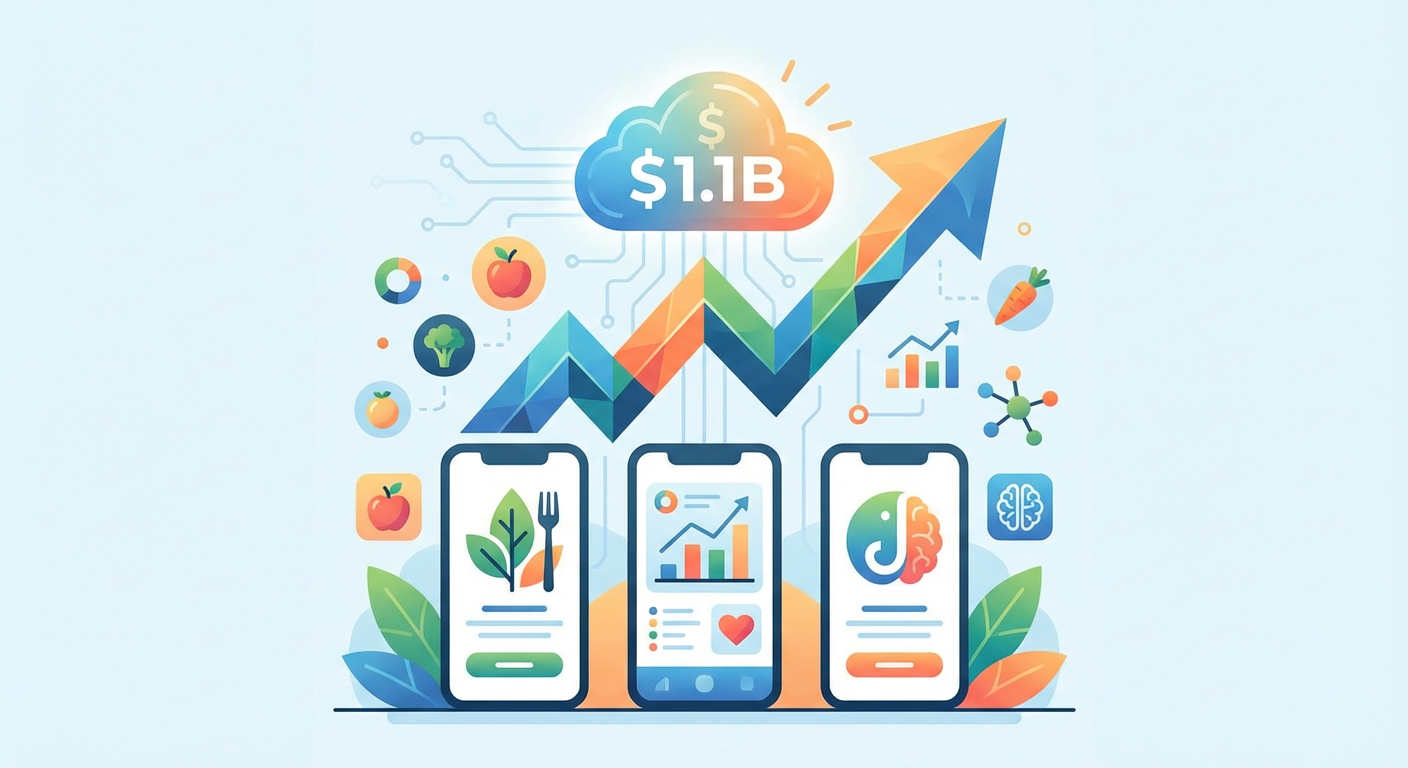
The AI nutrition app space has become genuinely big money. We’re talking $1.1 billion in global revenue in 2025, with apps like Noom, Zoe, and January AI pulling most of the downloads according to app analytics data. These aren’t scrappy startups anymore. They’re venture-backed companies with serious resources and serious marketing budgets. That’s partly why the FTC warning felt significant. The market had grown past a certain threshold and someone noticed.
I downloaded five apps across different price points and philosophies: Noom (the psychology-first approach), Zoe (the microbiome testing angle), January AI (the newer entrant), MyFitnessPal (the OG database app with AI features bolted on), and one I’m going to call “Generic Calorie Counter” because honestly, I can’t remember which one it was by the end. The experience was somehow both impressive and disappointing in ways that don’t fit neatly into a review format.
What Actually Happens When You Use Them
Noom asked me approximately eight million questions about my eating habits and psychology before I could get a meal recommendation. It felt invasive in a way that was almost clever. January AI moved faster, using machine learning to build a profile from less data. Zoe wanted me to order a home microbiome test kit and do these blood sugar monitoring experiments. MyFitnessPal basically just wanted me to log food like it’s 2012.
Here’s what I noticed: the apps with the strongest science behind them were also the most honest about their limitations. Zoe, which markets its personalized nutrition program as being based on gut microbiome testing and real-time data, has actually published peer-reviewed research. There’s a study in Nature Medicine showing that their participants saw a 17% improvement in how their bodies handled blood sugar after eighteen weeks. That’s real data from a rigorous journal. But even with that, the framing matters. A 17% improvement in one biomarker is meaningful. It’s not the same as “lose twenty pounds fast.”
The apps that made the broadest claims tended to use the vaguest language once you actually got into the experience. They’d promise “personalized metabolic coaching” but then recommend something pretty generic once you hit the paywall. It was like ordering coffee and being promised “a beverage customized to your unique taste profile” only to get drip coffee with the option to add cream.
The Reality Check That Research Keeps Showing
I kept one nagging question in my head while testing these apps: Do they actually work? And if so, how much better than just, like, trying to eat vegetables?
A meta-analysis published in BMJ Open this year looked at thirty-four randomized controlled trials comparing different diet app approaches. The average weight loss from using these apps over twelve weeks was 1.8 kilograms. About four pounds. When people worked with an actual dietitian instead, they lost 3.1 kilograms on average. So apps work. They just work significantly less well than talking to a human expert. That’s important context that almost no app marketing includes.
There’s also the confidence problem. A Pew Research survey from this year found that 44% of Americans who used a health app in the past year weren’t at all confident that the app’s recommendations were actually based on solid science. Nearly half. That’s not a small number of skeptics. That’s a sign that something in the relationship between these apps and their users feels fundamentally off. After testing five of them, I get why.
What the FTC Warning Actually Changed
The FTC Digital Health Technology enforcement actions were a start, but walking through this myself made me realize it’s more complicated than just “companies are lying.” Some of these apps genuinely use interesting science. Some of them collect data that could be genuinely useful. The problem is the gap between what they actually do and what they promise.
After months of testing, I found myself using elements of different apps rather than committing to any single one. I use MyFitnessPal’s database because it’s comprehensive and unsexy, which somehow makes it more trustworthy. I pay attention to Noom’s behavioral prompts about my eating patterns because they asked enough questions that they actually seemed to notice things specific to me. I skipped the microbiome testing from Zoe, partly because I was cheap and partly because I kept remembering that 1.8 kg figure.
What surprised me most was that the apps worked best when I stopped believing their marketing and just used them as tools for data collection and reflection. The AI part was almost secondary. It was the act of paying attention that mattered. Any of these apps could have been a spreadsheet and gotten me about 80% of the way there.
I’m curious what your experience has been if you’ve tried any of these. Did they change anything for you, or did they just sit on your phone collecting dust and notifications? There’s probably something worth knowing in how different people’s expectations matched up with what they actually got.
