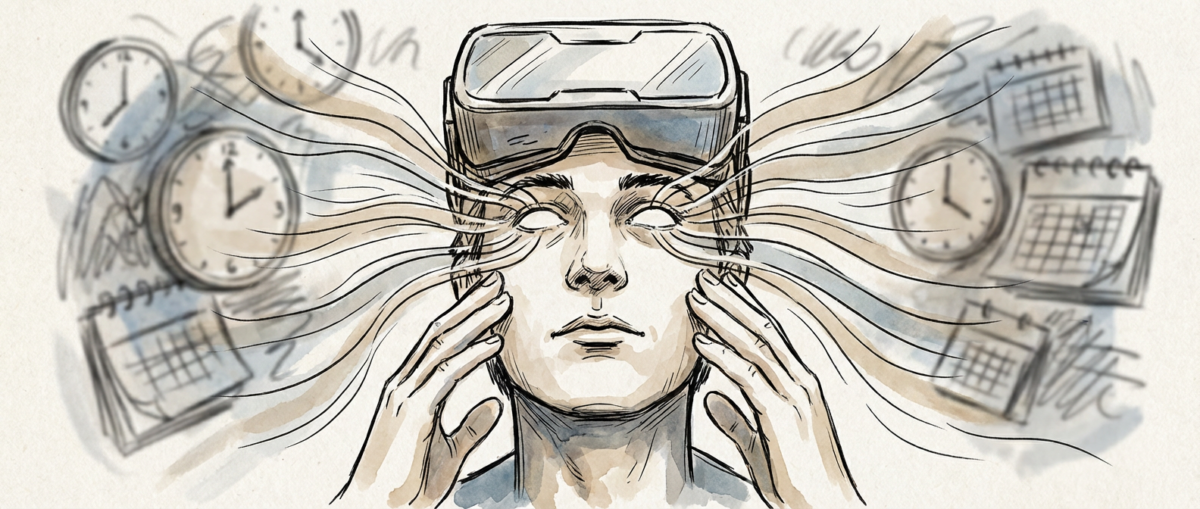
The First Week: When Nobody Mentions the Headaches
I picked up the Vision Pro on day one of my experiment knowing exactly what I was signing up for: three thousand five hundred dollars, a device that Apple released back in February 2024, and thirty days to figure out if spatial computing was actually going to change my life or just give me an expensive headache. Spoiler alert: the answer was yes to both.

The first thing you notice isn’t the display or the weird hand-tracking magic. It’s how your eyes feel after about ninety minutes of use. Not tired in the way you get tired looking at your phone. Different. Like someone’s slowly tightening a vice around the bridge of your nose. I kept thinking I was just adjusting to wearing the device, that it would pass. I was wrong about that.
By day three, I started paying attention. The headaches weren’t random. They showed up around the same time every afternoon, right after I’d been using the Vision Pro to work. I didn’t immediately connect the dots because I was too busy being impressed by the device itself. That’s the trap, isn’t it? The technology is so convincing that you ignore what your body’s trying to tell you.
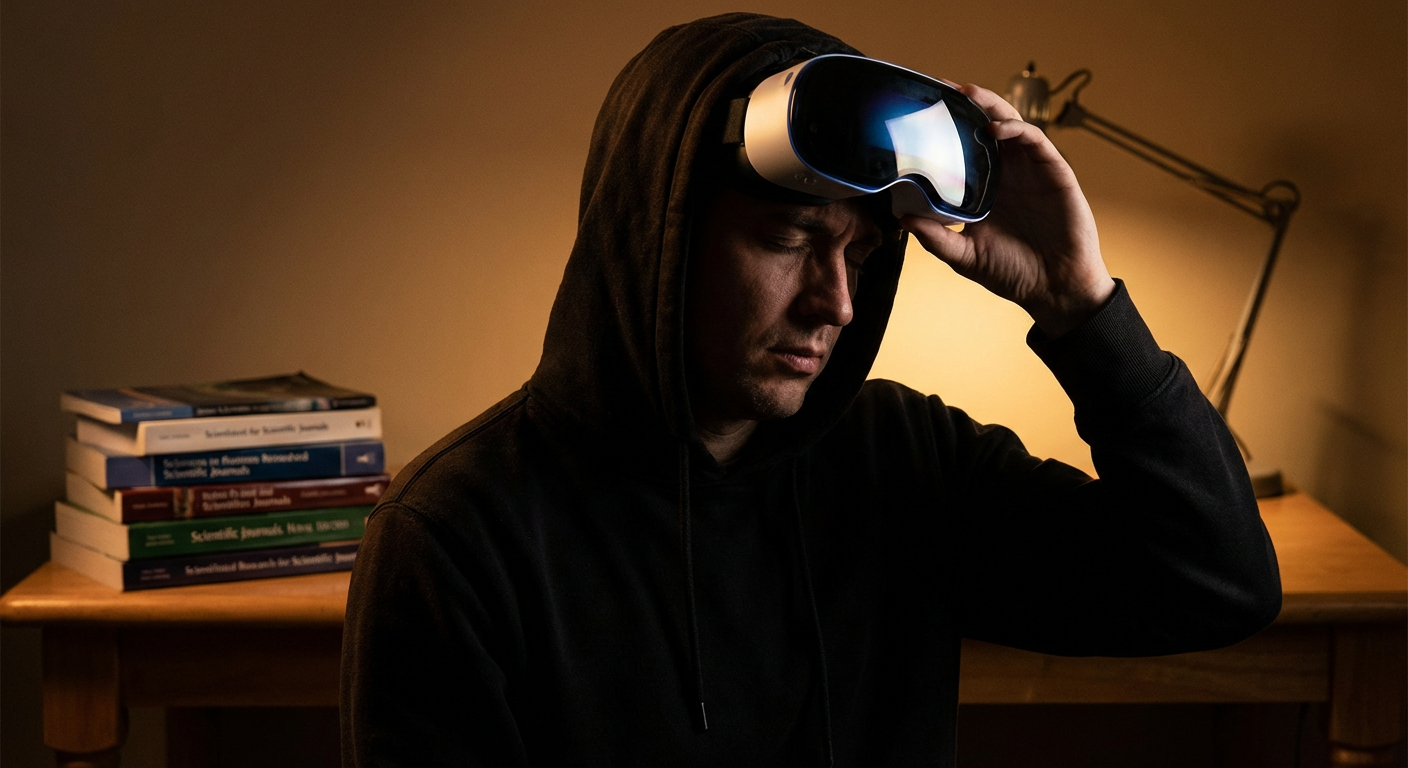
The Science Nobody Reads: Eye Accommodation and Why Your Brain Gets Confused
Here’s the thing that changed everything for me: I actually read the small print. You know, that section in Apple Vision Pro health and safety guidelines that nobody looks at? Buried in there is the 20-20-20 rule. Every twenty minutes, take a break. Look at something twenty feet away for twenty seconds. Simple. Also completely non-negotiable if you want to keep your eyes functioning.
I started digging into the actual research around extended headset use. A 2025 study in the Ophthalmic and Physiological Optics journal found something interesting: when people use XR headsets for more than two hours at a stretch, about seven out of ten participants showed measurable increases in something called accommodative lag. Your eyes basically forget how to focus properly. They get stuck in a weird middle position between near and far vision. Your brain keeps trying to make sense of conflicting signals, and that’s when the headaches arrive.
What’s happening is your eyes are being asked to do something they don’t naturally do. The Vision Pro has this eye-tracking system with five sensors and two high-resolution cameras that reads your gaze over ten thousand times every single second. It’s tracking where you’re looking with precision that seems impossible. But that precision comes at a cost. Your eyes are working harder than they realize, locked into a conversation with a device that never blinks, never looks away, never gives them a moment of actual rest.
Nobody warned me about this part. The tech specs mention the tracking. The marketing talks about how natural it feels. But natural-feeling doesn’t mean your eyes aren’t being strained in ways you can’t immediately perceive.
Week Two: The Real Numbers and Why People Send These Things Back
Around day ten, I got curious about return rates. Turns out roughly one in five people who buy these headsets send them back within the first month. Twenty-two percent, to be specific, according to IDC’s Q3 2025 data. That’s significantly higher than the baseline return rate for consumer electronics, which hovers around eight to ten percent. That number haunted me a little bit. One in five. Those aren’t people who hated the technology. Those are people who probably got headaches too.
I started being more disciplined about the breaks. Not because I suddenly understood the science better, but because I didn’t want to be a statistic. I set a timer. Every twenty minutes, off came the headset. Eyes forward. Something in the distance. Twenty seconds. It felt ridiculous and tedious and utterly necessary.
The weird part was how much better everything felt once I actually did it. Not just the absence of headaches, though that was nice. The overall experience got better. When I came back to the Vision Pro after a proper break, the images seemed sharper. The interaction felt smoother. My brain wasn’t foggy anymore. Turns out your eyes are connected to your whole system, and when they’re stressed, everything suffers.
What Changed in Week Three and Beyond
By the third week, I’d developed a rhythm. Thirty minutes on, ten minutes off became my groove. Not the manufacturer recommendation, but what my particular eyes seemed to need. Some days I could push forty-five minutes. Other days, thirty felt like the limit. What I figured out: there’s no one answer. Your eyes are specific to you. Your accommodation might be different from mine. Your sensitivity to the eye-tracking might be different. Your head shape and the way the device sits on your face matters.
What I didn’t expect was how much this experience shifted how I think about technology generally. When you spend a month actively managing eye strain from a spatial computer, you start questioning a lot of assumptions. Like why we don’t talk more honestly about the physical cost of these devices. Or why the guidelines are hidden in the legal documentation instead of being front and center. Or why someone couldn’t have mentioned during the demo that this might cause sustained discomfort if you’re not careful.
I kept using the Vision Pro. I didn’t return it. The technology is genuinely remarkable, and once you adjust your expectations and your habits, it becomes less of an ordeal and more of a tool. But I’d be lying if I said the first thirty days weren’t a process of unlearning the way I thought headsets were supposed to work and relearning what my body actually needed to stay comfortable.
The Incomplete Truth: What I’m Still Figuring Out
I’m six weeks in now, and I’m still adjusting. Some days I forget to take breaks and remember why I shouldn’t. Other days I’m rigorous and everything flows. I’m noticing that afternoon eye strain is less intense now, either because my eyes are adapting or because I’m not pushing them past their limits. Honestly, I’m not sure which one it is.
What I do know is this: if you’re thinking about trying one of these devices, go in with your eyes open. Literally. Understand that the experience isn’t just about the visuals and the interaction design. It’s also about managing your physiology. Your eyes have limits, and those limits are real and measurable and worth paying attention to.
I’m curious what your experience would be. Have you tried spatial computing? Did you notice the eye strain? Did anyone actually mention it to you beforehand, or were you surprised like I was? I’m still gathering data on this, trying to understand the patterns better. This feels like the kind of thing we need to talk about more openly.
