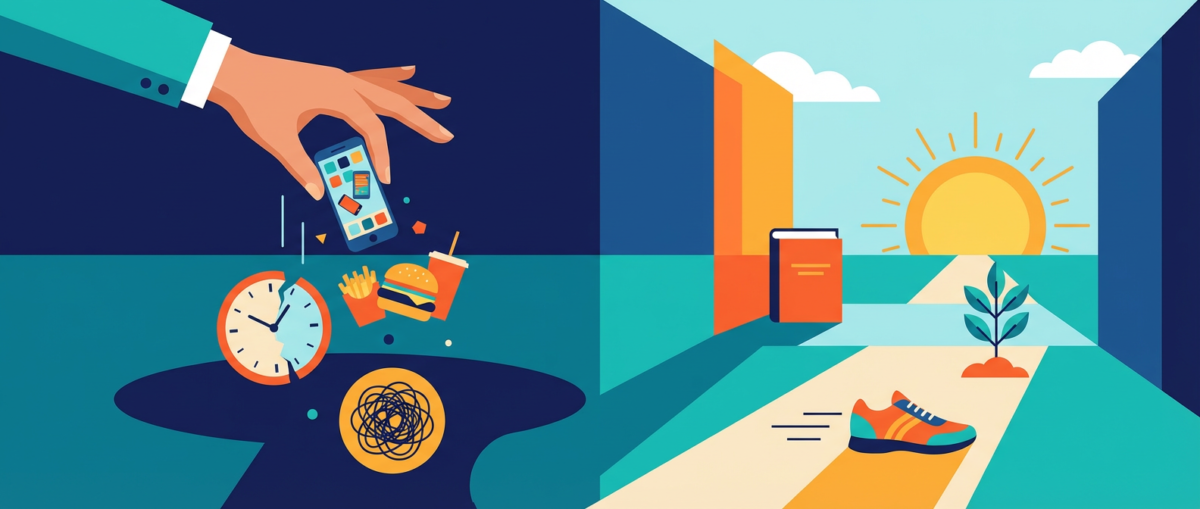
The Morning Scroll That Wasn’t Actually Morning Anymore
I used to check my phone before my feet hit the floor. You know the drill—that automatic reach for the nightstand, the squinting at notifications, the immediate download of everyone else’s urgency into my barely-conscious brain. I told myself it was just five minutes of catching up, but my screen time reports had other ideas. Turns out “five minutes” was doing some creative accounting.
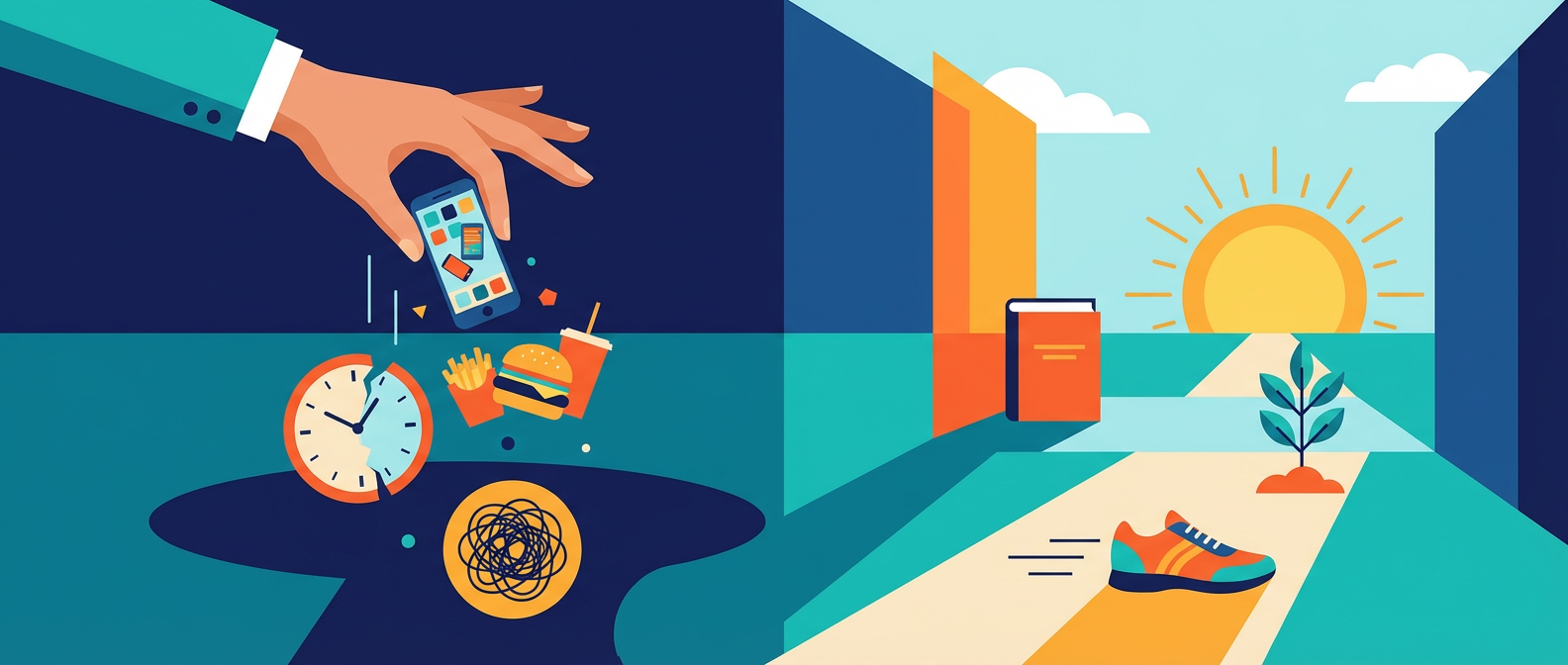
The breaking point came during a family breakfast when my nephew asked me a question three times before I looked up from scrolling through replies to a tweet I’d forgotten I’d posted. His little face had this confused expression, like he was trying to figure out what invisible thing was more important than pancakes and his story about finding a cool rock. That hit differently than all the articles about phone addiction ever could.
Now my phone stays in another room until after coffee. Real coffee, not the distracted sipping while reading about strangers’ weekend plans. It’s been six months, and I haven’t missed a single important thing. Turns out the world doesn’t actually need my immediate awareness of every trending topic at 7 AM.
The Productivity Theater I’d Been Starring In
I was the person with seventeen different task management apps, color-coded calendars, and a bullet journal that looked like it belonged in a museum. I optimized everything except the actual doing part. My system for getting things done had become more complex than the things themselves.
The absurdity hit me when I spent forty-five minutes researching the best app to track my habit of researching productivity apps. I was meta-procrastinating, which feels like it should earn some kind of award for creative avoidance. My elaborate systems had become their own full-time job, complete with maintenance schedules and upgrade anxiety.
These days I keep a single notebook and write down what needs doing. Revolutionary, I know. Things still get done, maybe more efficiently because I’m not constantly managing my management system. Sometimes the old ways work precisely because they don’t try to work perfectly.
The Expert Opinions I’d Been Collecting Like Stamps
I used to treat podcasts and newsletters like homework assignments. Every productivity guru, every thought leader, every person with a framework for living better—I absorbed it all with the dedication of someone studying for a final exam in Life Optimization. My phone was basically a portable university of other people’s certainties.
The problem with consuming endless expert advice is that you start believing expertise is something you download rather than develop. I had opinions on everything and experience with nothing. I could tell you the “research shows” answer to any life question but couldn’t figure out what worked for me specifically, not people-in-general or study-participants-under-controlled-conditions.
I still learn from others, but now I’m pickier about whose voice gets real estate in my head. I’ve learned to tell the difference between information that changes how I think and information that just makes me feel informed. The difference is sharper than you’d expect once you start paying attention.
The Perfect Version of Myself I’d Been Chasing
Future Me was going to be amazing. She’d wake up at 5 AM for yoga, meal prep on Sundays, and have opinions about wine that went beyond “tastes like grapes.” She’d be the kind of person who remembered birthdays without Facebook reminders and always had the right gift wrapped beautifully with matching ribbon.
Current Me kept letting Future Me down, which created this weird resentment toward myself for not being someone I’d never actually been. I was constantly disappointed in my present self for not living up to the standards of my imaginary self. It’s like being mad at your reflection for not looking like someone else entirely.
The shift happened when I realized I was trying to optimize toward someone else’s definition of good rather than figuring out what good meant for me. Maybe I don’t want to wake up at 5 AM. Maybe meal prep makes me feel trapped rather than organized. Maybe my version of having it together looks different from the Instagram version.
The Conversations That Went Nowhere But Took Forever
I used to feel obligated to engage with every discussion, to have takes on every topic, to prove I was informed and engaged and thinking about the right things. Social media had trained me to believe that not commenting was somehow a form of negligence, like failing to vote in the democracy of opinions.
But most online discussions aren’t actually discussions, they’re performance art where everyone’s playing to different audiences. People aren’t trying to learn or change minds; they’re trying to demonstrate their existing beliefs to their existing followers. I was spending energy on conversations that were really just public monologues happening in the same space.
Now I ask myself whether a conversation has the potential to actually go somewhere interesting before I join it. Most don’t, and that’s fine. My attention is finite, and where I spend it matters more than I used to think it did. Silence isn’t agreement or disagreement; sometimes it’s just choosing not to add noise to noise.
What Stopping Actually Starts
Here’s what nobody tells you about quitting things: the space that opens up doesn’t stay empty. When you stop filling your time with automatic behaviors, you notice what you actually want to do with those moments. When you stop optimizing everything, you have energy for the things that don’t need optimizing. When you stop trying to have all the right opinions, you can focus on developing the few that really matter to you.
I’m curious about what you’ve stopped doing lately, or what you’re thinking about stopping. Sometimes the most interesting conversations start with what we’ve decided to leave behind rather than what we’re trying to add to our lives.
