I once lost an entire Wednesday to a lamp. The bulb was too yellow, the shade sat slightly crooked, and I’d convinced myself that a sleeker, more expensive light source would crack something open inside me. I drove to a store, bought a matte-black floor lamp that cost more than my first car, angled it at exactly forty-five degrees, sat down, and produced eleven words in two hours. The lamp was flawless. The output was trash.
This is the quiet, nagging lie that stalks anyone who makes things: the belief that a properly arranged room will delete all friction from the creative process. It’s a seductive thought because it’s easier to shop for shelving than to stare down a blank page. The myth of the perfect creative workspace isn’t really about desks and light bulbs. It’s about the hope that we can sidestep the hard, messy work of making something by first achieving a state of external order.

The Fantasy We’re Sold
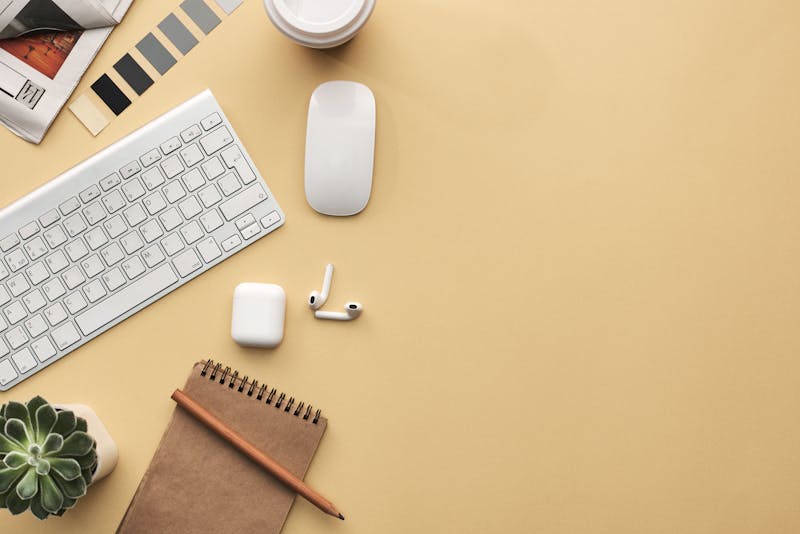
Scroll any social feed for thirty seconds and you’ll bump into it: a sun-washed room with a reclaimed wood desk, a ceramic mug placed just so, a MacBook tilted like it’s posing for a portrait. A fiddle-leaf fig in the corner with zero brown spots. An open leather-bound notebook, a fountain pen resting nearby. The caption might mention “morning pages” or “deep work.” What it’s really saying is: If your space looked like this, you’d finally finish that thing.
I’ve chased that image more times than I want to count. I’ve bought the notebooks with thick, creamy paper. I’ve rearranged my desk to face a window, then away from the window, then sideways to the window because I read somewhere that indirect light reduces eye strain. Each time, a genuine wave of optimism washed over me, like I’d cracked a math problem. The room looked gorgeous. And still, the work sat there waiting, completely indifferent to my new pencil cup.
The fantasy sticks because it externalizes a deeply internal fight. If we can point to a physical flaw—bad light, a cluttered surface, a chair that isn’t quite ergonomic—we can fool ourselves into thinking that fixing the object will fix the output. It’s procrastination dressed up as productivity. I’m not wasting time; I’m preparing the soil. The catch is, the soil can always use a little more preparation.
The Actual Environments That Produced Great Work
History doesn’t back up the idea that creativity demands a curated backdrop. Roald Dahl wrote in a grubby shed with an armchair, a sleeping bag draped over his legs, and an electric heater keeping the chill at bay. He balanced a board across his lap and wrote by hand with yellow Ticonderoga pencils. Nothing about that shed would land on a design blog. It was cramped, dusty, and entirely functional.
Jane Austen wrote in the middle of a bustling household, usually in the sitting room with family members coming and going, conversations buzzing around her. She didn’t have a door to close. She didn’t even have a room of her own the way Virginia Woolf would later describe. She had a small walnut table and the ability to focus through noise.
What these examples hint at isn’t that we should romanticize discomfort, but that the link between environment and output is a lot looser than we pretend. The essential ingredient was never the shed or the sitting room. It was just the decision to start, and then to keep going.

What We’re Really Avoiding
Strip away the aesthetic worries and what’s often left is a quiet fear of not being good enough. A messy desk takes ten minutes to clean. A messy first draft can’t be tidied up that way. The physical space becomes a handy stand-in for the psychological space. I’ve noticed my urge to reorganize my office spikes exactly when I’m up against a piece of writing that scares me. The moment I sense I might not be able to pull something off, I suddenly develop a burning interest in cable management.
This avoidance has a sneaky side effect: it raises the stakes. After you’ve spent three hours color-coding your bookshelf, you feel crushing pressure to produce something worthy of that bookshelf. The workspace turns into a stage, and you, the performer, are terrified of flubbing your lines. The perfect desk is a judge, not a friend.
There’s also a whiff of identity performance. A creative workspace, especially one posted online, can become a way of saying, Look, I am a serious person who makes serious things. But the work itself is the only credential that counts. Nobody ever finished a great novel and thought, “Yes, but did you see the author’s monitor riser?”
The Utility of a Good-Enough Space
None of this is an argument for working in a dumpster. Physical comfort matters. A chair that doesn’t wreck your back is a legitimate investment. A screen that doesn’t flicker is a kindness to your eyes. But there’s a canyon between functional and fetishized. The gap between “I need a flat surface” and “I need a live-edge walnut slab with hairpin legs” is where the myth sets up camp.
I’ve done some of my best work at a folding table in a rental apartment that smelled faintly of the previous tenant’s curry. The lighting was overhead fluorescent, the kind that makes everyone look like they’re being interrogated. But I was deep in a project that grabbed me, and the room vanished. That’s the real test of a workspace: does it disappear when the work starts? If it does, it’s good enough. If it constantly tugs at your attention—if you’re always noticing the glare on the monitor or the wobble in the desk leg—fix it fast and move on.
The danger is treating the workspace as its own hobby. There’s a whole industry feeding on this: desk setup tours, “what’s on my desk” videos, productivity tool reviews. Consuming that stuff can feel like work, but it’s consumption, not creation. It’s watching someone else’s highlight reel while your own blank page sits there waiting.

Building a Workspace That Actually Helps
After years of trial and error, I’ve settled on a few principles that have nothing to do with looks. First, remove obvious friction. If you have to shift a stack of mail every time you sit down, deal with the mail. If your chair squeaks, oil it or swap it out. These aren’t creative decisions; they’re maintenance tasks. Treat them that way.
Second, keep the tools you actually use within arm’s reach, and stash everything else out of sight. I have a drawer of art supplies I haven’t touched since 2019. They don’t need to sit on my desk reminding me of my abandoned sketching ambitions. A workspace is not a museum of your past interests.
Third, lower the barrier to starting. For me, that means leaving my notebook open to the next blank page and my pen uncapped. It’s a tiny thing, but it removes one small obstacle. The less ceremony required to begin, the more likely I am to do it.
Fourth, accept that no arrangement will make the work easy. There is no lamp, no chair, no background music playlist that will write the sentence for you. The work is the work. The space is just the container. A gorgeous container can hold garbage, and a dented old bucket can hold gold.
Letting Go of the Pinterest Board
I still catch myself. A few weeks ago, I found myself browsing standing desk converters at midnight. My current desk is fine. It’s a perfectly adequate height. I don’t have back pain. But I’d read an article claiming standing boosts creative thinking, and I was off. I had the item in my cart before I stopped and asked myself the only question that ever matters: Will this help me make the thing, or will it help me avoid making the thing?
The answer was obvious. I closed the tab. The next morning, I sat at my fine, adequate-height desk and wrote for two hours. The work wasn’t brilliant, but it existed by lunchtime. That’s the whole game: existence over elegance.
There’s a kind of grief in letting go of the perfect workspace fantasy, because it means accepting full responsibility. If the environment isn’t to blame, then the only variable left is you. That’s a heavy thing to sit with at 9 a.m. over a cup of coffee. But it’s also freeing. You can stop waiting for the conditions to be right. They will never be right. They will only ever be what they are.
Frequently Asked Questions
Does a messy workspace really affect creativity?
It can, but not how most people think. A cluttered space can create low-level cognitive drag, which might make it tougher to focus. But the fix is a quick tidy-up, not a full design makeover. The bigger risk is using “mess” as an excuse to stall the actual work. If you can function in the space, the mess probably isn’t your real problem.
What’s the one thing every creative workspace actually needs?
A reliable tool for catching ideas and a chair that doesn’t hurt. Beyond that, it’s all negotiable. Some people need silence; others need noise. Some need a view; others find it distracting. The only universal requirement is that the space doesn’t actively stop you from working. Everything else is personal preference dressed up as necessity.
How do I stop obsessing over my workspace and just start working?
Set a timer for ten minutes and begin before you’re ready. The physical act of starting—typing a terrible sentence, sketching a lopsided circle—cracks the spell of preparation. Once the work exists, however imperfectly, the workspace fades into the background. It’s not a magic trick, but it’s close. The hardest part is always the first few minutes; after that, momentum takes over.
Is it worth investing money in a home office setup?
Yes, to a point. Spend what you need to be physically comfortable and to knock down genuine obstacles. A good chair is worth it. A second monitor might be worth it if it saves you time. But be honest about whether a purchase is fixing a real problem or just feeding the fantasy. If you can’t clearly say how the item will improve your output, it’s probably decor, not infrastructure.
The perfect creative workspace does not exist. It never has. What exists is a person, a chair, and the stubborn willingness to make something out of nothing. The rest is just set dressing.