Personal essays, notes, and ideas worth sharing.

Category: Default (page 21 of 21)

Sticky post

Jordankwinn

Jordankwinn

Personal essays, notes, and ideas worth sharing.

This is my corner of the internet. I write about the things I’m thinking about, books, projects, ideas, and occasionally my own life. No particular niche, no content strategy, no editorial calendar. Just thoughts when they come.

Topics we cover: Essays · Projects · Reading Notes · Ideas · Personal

Personal productivity and the anti-hustle backlash — An Honest Process

Here is the thing I keep coming back to on this. The topic of personal productivity and the anti-hustle backlash deserves more careful attention than the typical coverage provides, and the reason is not complicated once you know where to look.

What I find most interesting, and I think you will too, is four-day work week trials showing productivity neutral or positive in 60+ company studies. The honest read of the situation is also the more accurate one once you examine what the evidence actually shows.

Personal productivity and the anti-hustle backlash — An Honest Process

The Diary: Setting the Terms

“Quiet quitting,” coined in 2022, still shows up in 2026 workplace conversations. This isn’t just a data point in the story of personal productivity and the anti-hustle backlash. It’s the structural condition that makes everything else in this analysis make sense. Context like this doesn’t age quickly. The conditions that produced it have been building for years, and this convergence is what makes the current moment different from previous moments that looked similar from a distance.

Four-day work week trials showing productivity neutral or positive in 60+ company studies.

Basecamp and Signal vs. Noise’s anti-meeting culture is gaining traction. Paul Graham essays has been tracking this consistently.

What makes this moment worth examining carefully is not the novelty but the confirmation. These dynamics have been visible for some time. What’s new is that they’ve reached a threshold where ignoring them requires active effort rather than simple inattention. That threshold crossing is the event, not the underlying movement that produced it.

And personal knowledge management tools like Obsidian and Notion reaching millions is part of that same picture. These elements don’t exist in separate silos. They’re reinforcing conditions in the same structural shift.

Illustration for Personal productivity and the anti-hustle backlash — An Honest Process

The Process Notebook: The Analysis

Personal knowledge management tools like Obsidian and Notion reaching millions is where the analysis gets more specific. The surface reading is accessible and not wrong, but it misses the mechanism. And the mechanism is where the practical insight lives. What I find most interesting, and I think you will too, is that the mechanism is dopamine detox and digital minimalism movements growing as counter-culture. Understanding it changes what you do with the information.

Burnout has been recognized as an occupational phenomenon by WHO since 2019.

The skeptical counterargument deserves honest engagement. Previous moments with similar surface characteristics didn’t produce the outcomes that seemed logical at the time. That history is real. What’s different now is that burnout has been recognized as an occupational phenomenon by WHO since 2019. This isn’t a minor variable. It’s the infrastructure condition that previous cycles lacked. Infrastructure changes tend to be persistent in ways that sentiment-driven changes are not. Cal Newport productivity writing is one source tracking this with the rigor it requires.

There’s also a distributional question that often goes unaddressed in coverage of personal productivity and the anti-hustle backlash: who captures the value created by these shifts, and who absorbs the disruption costs? The aggregate picture can be positive while the distribution is uneven in ways that matter enormously to specific participants. Keeping that distributional lens in view is part of reading the situation clearly rather than simply optimistically.

Implications: What This Means If You Care About Work in progress

The implications of personal productivity and the anti-hustle backlash extend beyond the immediate context. “Quiet quitting,” coined in 2022, still shows up in 2026 workplace conversations. Combined with the structural conditions described above, this creates a situation where adjacent fields, decisions, and communities are affected in ways that aren’t always visible from inside the primary story. The second-order effects are frequently more important than the first-order ones, and they’re where careful attention pays the highest returns.

Think distinct individual voice, whatever that person actually sounds like.

The practical question isn’t whether to engage with these dynamics but how. The answer depends on context, on what role you occupy relative to personal productivity and the anti-hustle backlash, and what your actual decision horizon is. But the first step is the same regardless: accurate understanding of what’s actually happening rather than what the most available narrative says is happening.

A few concrete observations are worth separating out from the broader analysis. First: four-day work week trials showing productivity neutral or positive in 60+ company studies isn’t a temporary condition. It’s a new baseline. Second: dopamine detox and digital minimalism movements growing as counter-culture suggests that the adjustment period isn’t over. Third, and most important: the organizations and individuals who are treating the current moment as a new steady state rather than a transition are making a categorization error that will be costly to unwind later.

The Case Against: What the Critics Get Right

Intellectual honesty requires acknowledging the strongest counterarguments, not just the weakest ones. The case against the optimistic reading of personal productivity and the anti-hustle backlash isn’t trivial. There are structural vulnerabilities in the current picture that deserve direct engagement rather than dismissal.

The most serious objection is about sustainability. Basecamp and Signal vs. Noise’s anti-meeting culture gaining traction can be read not as a foundation but as a ceiling, a point beyond which growth becomes self-limiting because of the very dynamics that produced it. If the current state has already incorporated most of the available supply of early-adopting participants, the remaining growth curve may be structurally shallower than the recent trajectory implies.

Burnout has been recognized as an occupational phenomenon by WHO since 2019.

Looking Forward

The trajectory here is clearer than the pace. Making predictions about when specific thresholds will be crossed is genuinely difficult, and anyone claiming precision about timelines should be treated with skepticism. But the direction, toward “quiet quitting” continuing to resonate and continued development of the conditions described above, is supported by the evidence in a way that isn’t contingent on a single variable going right.

Burnout being recognized as an occupational phenomenon by WHO since 2019 is the variable to watch as the leading indicator. Historical patterns suggest it moves first, with broader metrics following with some lag. This doesn’t make the outcome certain, but it makes it readable. And readability is the precondition for good decisions.

Three questions are worth holding as the story develops. First: are the structural conditions that enabled the current state durable, or are they cyclical? Second: who’s positioned to benefit from the next phase, and does that differ materially from who benefited in the current phase? Third: what would a clean falsification of the optimistic thesis look like, and is there any evidence of that signal emerging? These questions don’t need answers today, but having asked them changes what you notice in the months ahead.

That’s my read. I want to hear yours.

What would you try next if this were your project?

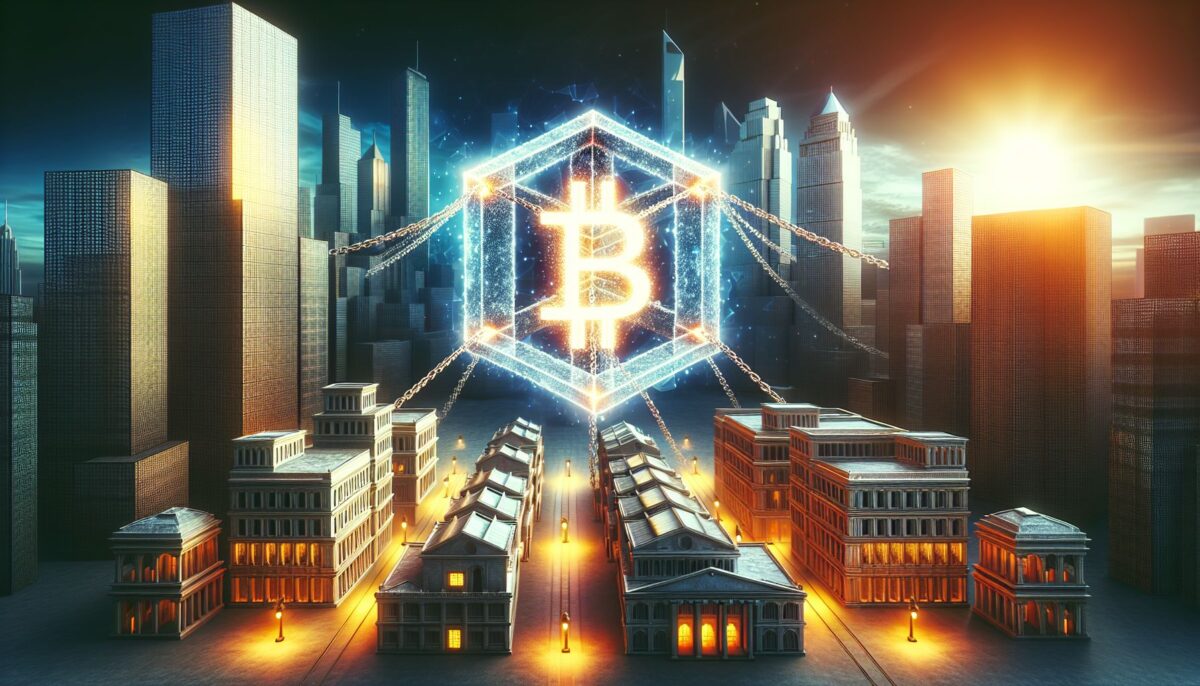
Blockchain: The New Architect of the Age of Transparency

Hey there, friends. So, I’ve been on a bit of a technology bender lately, going down the endless rabbit hole of blockchain technology. If you just groaned and imagined cryptocurrencies and NFTs, hang tight—blockchain is way more than digital coins and monkey pictures. It’s like what the internet was to communication: a revolution that’s going to touch every part of our lives. You might even call it the new architect of our Age of Transparency.

Enter the Blockchain Universe

Alright, so what in the digits and hashes is blockchain anyway? Simply put, it’s a glorified digital ledger, but don’t let the high school accounting nightmares deter you. Imagine a world where everything you do online is timestamped, immutable, and absolutely transparent. Blockchain is the tech that can support that world. Yeah, smart ledgers can be sexy too.

Why Blockchain and Why Now?

Let me paint a picture: remember the day you realized Netflix and chill was way better when you didn’t have to deal with commercials? Blockchain similarly removes irritating middlemen, like banks and lawyers, from certain transactions. It’s like having your cake and eating it too—if the cake could validate your identity, keep your secrets safe, and let you travel across borders without flashing your passport every five minutes.

A common gripe is that tech innovations promise a ton and deliver sparingly, but blockchain’s here, in action, from streamlining logistics to democratizing finance. It feels like a utopian spin on what our digital future could be—one where trust isn’t a commodity, but a given.

Blockchain’s Greatest Hits

Decentralized Finance (DeFi): The Money of the Future

Let’s talk dough. Decentralized Finance is like a Wall Street Wolf, but without the wolfish greed. No bone-crunching fees or just-fell-off-the-chair interest rates; it’s a peer-to-peer financial system run on blockchain that makes Uncle Scrooge’s vault look fairly pedestrian.

Imagine securing a loan without a bank or trading assets across borders in your slippers (not that I’ve ever done that, I don’t even have slippers). Smart contracts handle this—basically automated “if-then” statements that execute automatically. DeFi platforms make financial transactions more transparent and accessible. The opportunity for microloans and investment pooling without traditional bureaucracy is nothing short of mind-blowing.

Supply Chain Revolution

Blockchain doesn’t stop at finance; it works incredibly well with logistics and supply chains too. Think about knowing exactly where your coffee beans were harvested, who harvested them, and if they were treated fairly during production. Using blockchain, every step from farm to your morning cup is documented and shared in an unalterable record.

Major players like Walmart (and it doesn’t get much more major) are using blockchain for supply chain transparency. If companies can track each lettuce head’s journey, incidents like food contamination become easier to manage—no more wondering if your Caesar salad is secretly plotting your demise.

Governance and Voting: Finally Trustworthy?

Now, let’s roll up our sleeves and get political. Sure, we all know—or avoid contentious debates about—the issues with voting systems: tampering, inefficiency, pizza parties. Blockchain offers a trust layer that could actually guarantee a one-person-one-vote system.

Immutable records and distributed networks mean blockchain-based voting could eliminate traditional weaknesses like voter fraud or ballot manipulation. Also, can we talk about the sheer convenience? Voting from your phone between memes and TikTok videos feels like the only way for future elections. I mean, accessibility doesn’t get much more on-the-go than this.

Creative Arts: Giving Life (and Royalties) to Creators

Finally, let’s not forget our struggling artists. In the blockchain space, artists can take advantage of decentralized marketplaces to sell their work directly to collectors without a middleman skimming off the top. Blockchain ensures authenticity, allows artists to retain ownership, and best of all, earn royalties on any secondary sales.

No more artists starving until someone sees their genius; blockchain’s connectivity means anyone can stumble upon their next favorite masterpiece, with the provenance to back it up.

Challenges and Crystal-Ball Gazing

Don’t get me wrong, blockchain isn’t as flawless as one of those crime show plots we all binge. It has its challenges. Scalability and energy consumption—looking at you, Bitcoin—are a work in progress. Yet, with queen bees like Ethereum moving to less energy-intensive consensus mechanisms, optimism’s warranted.

On the regulatory front, governments are, predictably, throwing wrenches into the utopian works. Still, as lawmakers globally come to terms with blockchain’s inevitability, I think we’ll see a regulatory landscape that’s as open as a beautifully scripted piece of code.

The Road Ahead

Just like in your scripted dystopian novels, blockchain’s future is exciting but uncertain. Will all industries adopt these transparent practices? Or will slow regulatory processes clip this young technology’s wings? My guess is that just like any technological breakthrough, it’ll take a healthy cocktail of innovation, regulation, and humor (we tech-insiders are funny people, trust me) to perfect the recipe.

So here you go, a sneak peek into blockchain’s ever-expanding universe. In a future that promises transparency, autonomy, and efficiency, we might be on the brink of a tech-driven utopia. Roll your eyes all you want, but here’s the thing: you can’t stop progress any more than you can stop your mom from tagging you in awkward childhood photos.

That’s it for today, folks. Stay ahead of the curve and watch this space—because who knows what else might shake the world tomorrow?