I Used to Think Rituals Were for Other People
For years, I rolled my eyes at anyone who talked about morning routines or mindfulness practices. It all seemed so performative, like something people did because they read about it in a productivity blog or saw it on Instagram. I was the person who prided myself on being adaptable, spontaneous, allergic to structure. Routines were for people who couldn’t handle chaos, and I could handle anything.
Then 2020 happened. Then my dad got sick. Then I changed jobs twice in eighteen months and moved across the country. Suddenly, my superpower of rolling with whatever life threw at me started feeling less like strength and more like I was constantly treading water in the middle of the ocean with no land in sight.
The funny thing about hitting your limit is that you become willing to try things you previously dismissed. Desperation is a hell of a motivator for intellectual humility.

The Coffee Cup That Became My Anchor
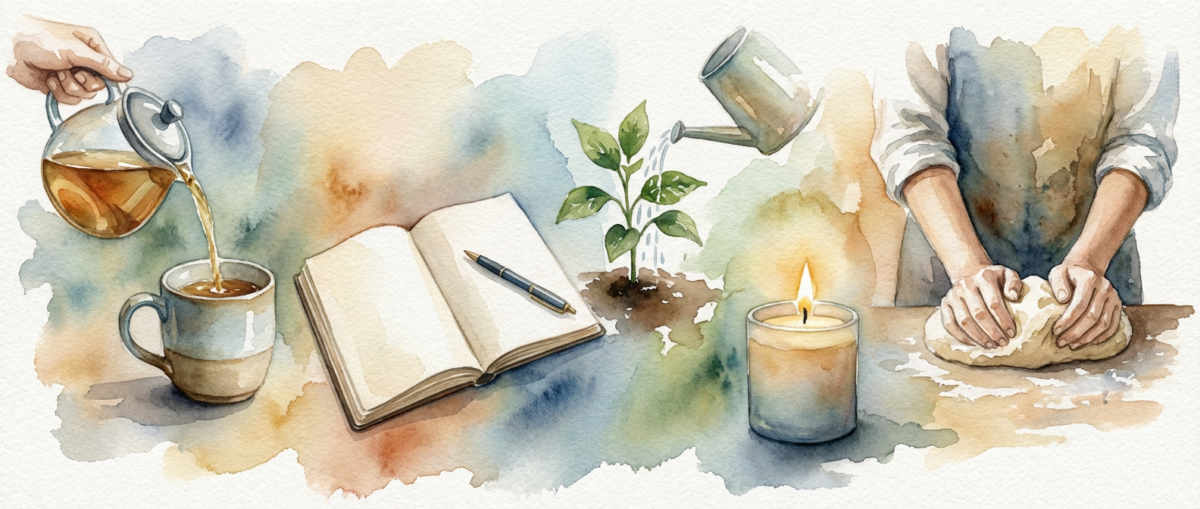
It started with a mug. Not just any mug, this specific blue ceramic one my sister brought me from a pottery studio in Vermont. I’d been drinking coffee out of whatever was clean, usually while scrolling my phone or rushing to get out the door. But one particularly overwhelming Tuesday morning, I made myself sit at my kitchen table with just the blue mug and my coffee. No phone, no laptop, no background podcast.
For exactly ten minutes, I sat there like an idiot. The silence felt aggressive. My brain kept trying to solve problems or remember tasks or worry about emails. But somewhere around minute seven, something shifted. The warmth of the mug in my hands, the steam rising up, the way the light hit the kitchen counter, it all felt suddenly present instead of like scenery I was rushing past.
I realized I hadn’t actually tasted my coffee in months. I’d been treating it like fuel instead of this small daily pleasure that was right there waiting for me. The ritual wasn’t about the coffee or the mug or even the sitting still. It was about remembering that I exist in my body, in this moment, in this specific place.
The Walk That Teaches Me How Days End
The evening walk happened by accident too. My neighbor’s dog, Charlie, had started barking every night around 6 PM, and instead of getting annoyed, I got curious. Turns out Charlie’s internal clock is more reliable than my phone’s calendar app. He knows when the day is transitioning to evening, and his bark was basically him saying, “Hey, pay attention to this shift.”
So I started walking around my neighborhood at 6 PM. Not for exercise or steps or any quantifiable benefit. Just to witness the day ending. The way porch lights start flickering on. How the sky changes color so gradually you don’t notice until suddenly it’s completely different. The sounds shifting from day noises to evening noises.
What surprised me was how much this small loop around four blocks became a bridge between work-brain and evening-brain. Without it, I’d find myself at 9 PM still mentally stuck in whatever problem I’d been wrestling with at 3 PM. The walk became this gentle way of telling my mind, “That part of the day is done now. You can set it down.”
I used to think transitions just happened automatically. Now I realize they need help, and a twenty-minute walk is apparently what does it for me.
The Sunday Reset That Actually Resets
Sunday evenings used to be the worst part of my week. That creeping dread of Monday morning, the weight of all the things I hadn’t done over the weekend, the general feeling that time was slipping away faster than I could grab onto it. I’d end up stress-cleaning my apartment or doom-scrolling until midnight, neither of which helped with the underlying anxiety.
Now I have what I generously call my Sunday practice, though it’s really just three specific things I do in order. First, I write down three things that went well during the week. Not major accomplishments or Instagram-worthy moments, just small things. Like how I had a really good conversation with the cashier at the grocery store, or figured out why my plant was looking droopy, or remembered to call my mom back within 24 hours instead of three days later.
Then I pick out what I’m wearing Monday morning and put it somewhere I can see it. This sounds ridiculous until you realize how much mental energy gets wasted on decision fatigue when you’re already running late and can’t find a clean shirt that matches your mood.
Finally, I make a list of three things I want to focus on the next week. Not a to-do list that will shame me by Thursday, just three areas where I want to put my attention. Sometimes it’s work stuff, sometimes it’s “remember to water the plants,” sometimes it’s “call the dentist I’ve been avoiding for six months.”
The whole thing takes maybe fifteen minutes, but it transforms Sunday night from this anxious void into something that feels intentional and calm.
What I Got Wrong About Grounding
I used to think being grounded meant being serious and centered and wise, like someone who meditates for an hour every morning and never feels rattled by anything. Turns out, for me at least, being grounded just means having a few reliable ways to remember where I am and what I’m doing here.
The blue mug reminds me that I have a body that can feel warmth and taste flavors. The evening walk reminds me that time moves in natural rhythms, not just in calendar notifications and deadline panic. The Sunday practice reminds me that weeks have shape and that I can participate in creating that shape instead of just being swept along by it.
None of these things require special equipment or apps or any particular spiritual framework. They’re just small ways of paying attention to what’s already happening. I was wrong about rituals being performative, they’re actually the opposite. They’re quiet, private ways of staying connected to the parts of life that matter but get drowned out by all the noise.
What are the small things that help you feel like yourself when everything else feels chaotic? I’m genuinely curious about the tiny rituals that work for other people, especially the ones that might seem completely unremarkable from the outside but create that sense of coming home to yourself.
